 How-to
How Can You Identify Roof Leak Sources?
Last Updated: November 7, 2026
Quick Summary
To identify roof leak sources, start indoors and follow the water trail: a ceiling stain marks where water broke through, not where it entered. Then scan the attic sheathing for water trails and follow each one upward to its highest point, which is usually closer to the entry point.
- Water follows gravity and the path of least resistance, so a ceiling stain rarely sits directly under the hole.
- In the attic, follow water trails on the sheathing upward to their highest point to find the leak source.
- Rusty or dark nail points poking through the decking show water has reached that spot repeatedly.
- Ground-level inspection with binoculars from several angles can catch missing shingles and lifted flashing without climbing.
- If a leak only appears during heavy rain, suspect flashing and drainage rather than a missing shingle.
Table of Contents
- Start Inside: Reading the Clues Before You Climb
- How to Find a Roof Leak in the Attic
- How to Find a Roof Leak From the Outside
- Find Roof Leaks With Infrared and a Controlled Hose Test
- Roof Leaks in Heavy Rain: Why Timing Changes the Diagnosis
- When to Stop Guessing and Call a Pro
- Get a Free Roof Assessment From Fraley's Home Improvement
- Frequently Asked Questions
Start Inside: Reading the Clues Before You Climb
Most people climb onto the roof first. That is the wrong move. The smartest way to learn how to identify roof leak sources starts indoors, where water leaves a visible trail. The pattern is usually the same: the stain tells you where to look before you ever touch a ladder. Below, we show you exactly how to trace a roof leak sources problem from the ceiling back to the shingle that caused it.
Water is lazy. It follows gravity and the path of least resistance. So a water stain on your ceiling rarely sits directly under the hole. It marks where water finally broke through, not where it got in. Keep that in mind and you will save hours of guessing.
Checking Ceilings, Walls, and Attic Materials
Look up first. A water stain is the most obvious clue, but the shape matters more than the size.
- Brown rings or discoloration usually mean an active or recent leak.
- Bubbling drywall or peeling paint signals water trapped behind the surface.
- Damp spots that grow after rain point to a live roof leak.
- Dark spots near the ceiling edge often trace to flashing or an ice dam.
If you see bubbling paint or soft drywall, the water is already spreading behind the wall. Our guide on signs of water damage behind walls walks through what to check next. For a full step-by-step process, see how to find the roof leak source.
How to Find a Roof Leak in the Attic
The attic is where the mystery usually gets solved, and it is also where most homeowners get hurt or misled. Do this part safely and methodically before you ever touch a ladder outside.
Safety first. Attics concentrate heat, dust, and sometimes vermiculite insulation that may contain asbestos in older homes. Wear an N95 respirator, eye protection, and gloves.
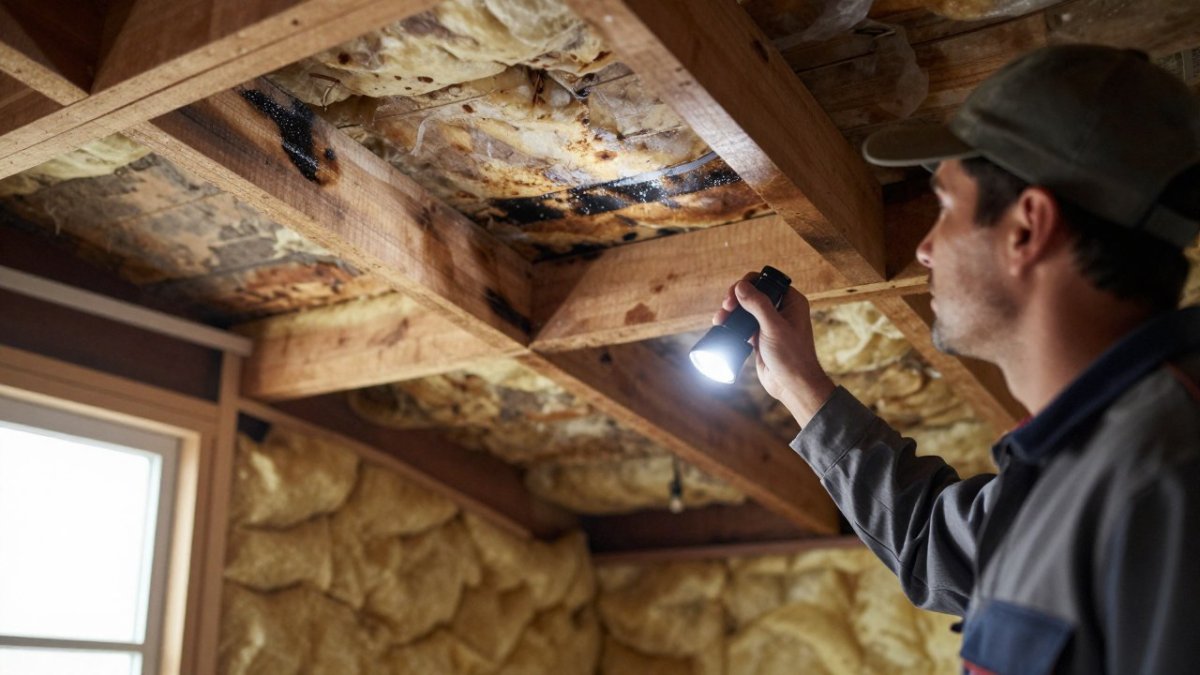
Read the sheathing, not the puddle. Work in daylight if possible and scan the underside of the roof decking in a grid, left to right, ridge to eave. What you are looking for is not a puddle but a pattern:
- Water trails and water marks on the wood sheathing. Follow each trail upward to its highest point; that is your leak source. Water wicks along the grain and along rafters, so the highest visible stain is usually closer to the entry point than the drip below it.
- Wet insulation and damp wood near rafters and around roof penetrations like vents and the chimney. Compressed or darkened insulation is a reliable sign of chronic moisture even when the wood looks dry.
- Rusty or dark nail points poking through the decking. Fastener rust is one of the most honest indicators in the attic: it tells you water has been reaching that spot repeatedly, even if the stain above it has dried.
- Mildew smell or mold growth confirms long-term moisture and tells you the leak is not a one-time event.
- Daylight through the deck. On a sunny day, kill the lights and look for pinholes of light at penetrations, valleys, and the ridge. Any visible gap is a candidate entry point.
Separate active from old moisture. A stain that is dry and crusty may be from a repaired leak. A stain that is dark, soft, or cool to the touch is likely active.
Check the usual suspects in order. Most attic leaks trace to one of five places: chimney flashing, plumbing and exhaust vent boots, skylight curbs, valleys where two roof planes meet, and the ridge or eave where wind-driven rain gets under the edge. Look at each one specifically rather than scanning the whole deck at once. Checking these vulnerable seams in sequence makes spotting attic leaks easier to connect to the signs they leave on the roof deck.
Watch out: never step between joists or walk on soft insulation, you can fall straight through a ceiling, and attic falls are a common cause of serious home-injury emergency visits.
The attic is where most leaks are solved, so scan the sheathing for these patterns and follow each one upward.
| Clue | What it tells you |
|---|---|
| Water trails and marks on sheathing | Follow upward to highest point, the leak source |
| Wet insulation and damp wood | Chronic moisture near rafters and penetrations |
| Rusty or dark nail points | Water has reached that spot repeatedly |
| Mildew smell or mold growth | Long-term moisture, not a one-time event |
| Daylight through the deck | Visible gap is a candidate entry point |
| Dry, crusty stain | May be from a repaired leak |
| Dark, soft, cool stain | Likely active leak |
How to Find a Roof Leak From the Outside
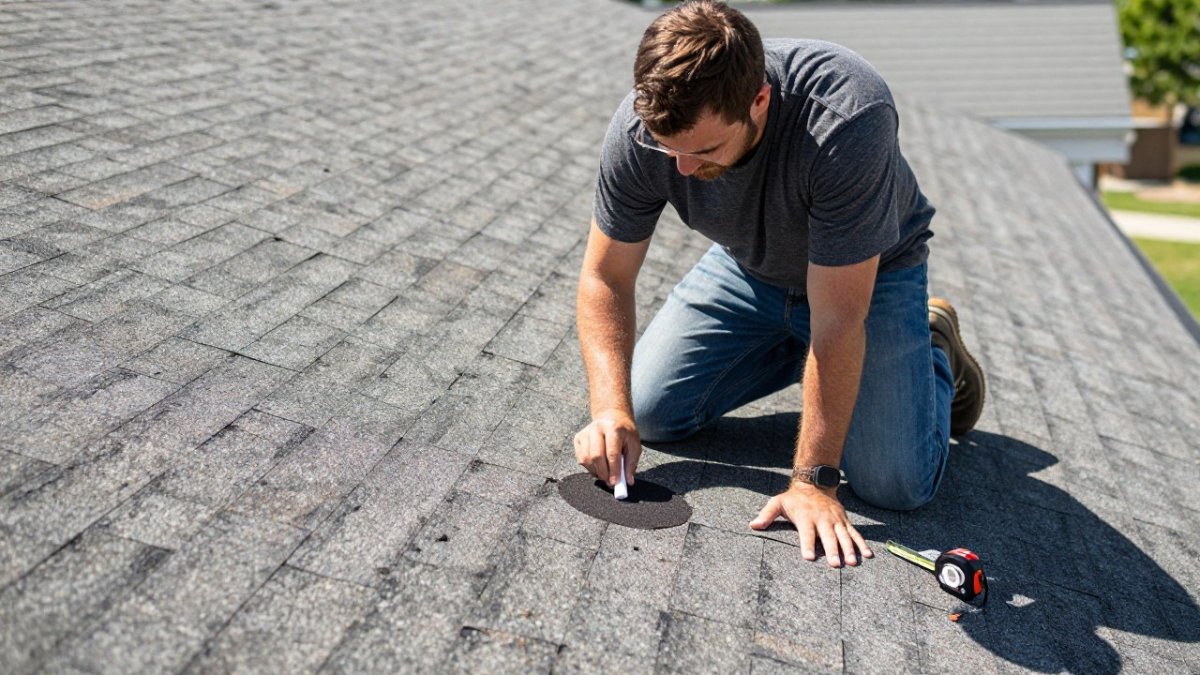
Before you climb, decide whether you should. Exterior inspection is one of the riskier parts of the job, so ground-level checks come first. Ground-level inspection with binoculars from several angles, front, back, and both sides, catches missing shingles, lifted flashing, and sagging lines without putting you on the roof at all.
Inspect the roof exterior in a fixed order so you do not miss the quiet failures:
- Shingles. Look for missing shingles, torn tabs, lifted or curled edges, and granule loss in gutters and downspouts. Granule loss and curling signal an aging roof, but a single missing shingle after a wind event is a far more common acute leak source.
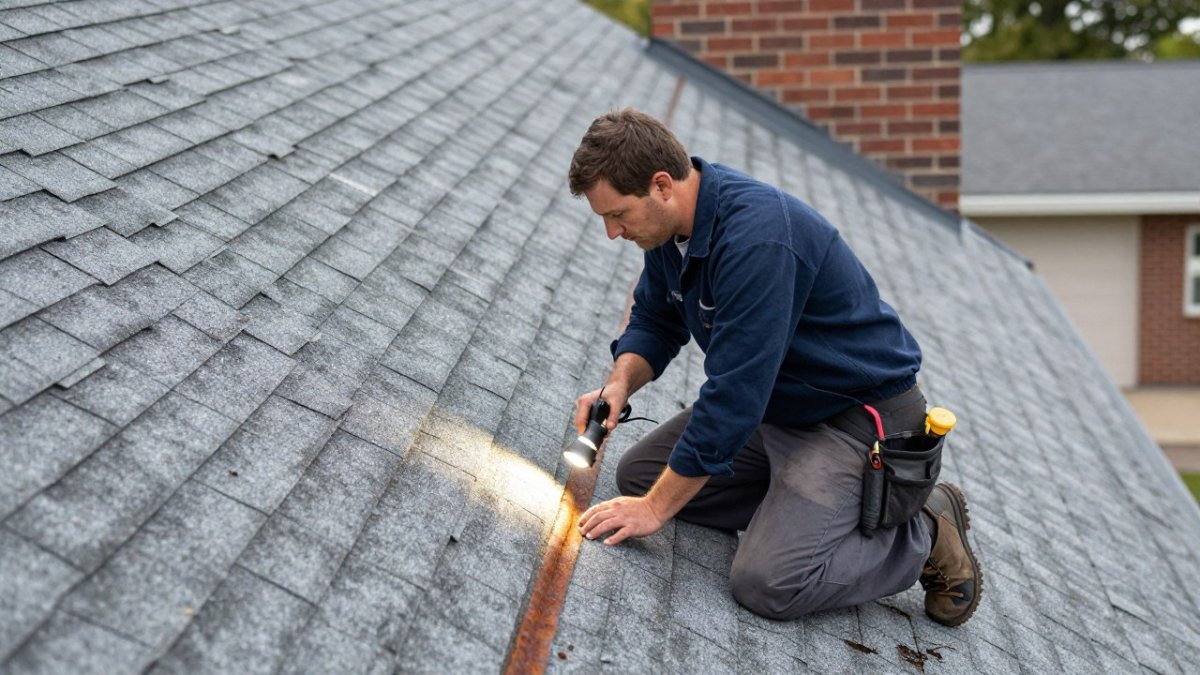
- Flashing. Cracked, lifted, or improperly lapped flashing around the chimney, vents, and skylights is a top culprit. Flashing fails at the seams and at the step-flashing joints on sidewalls, not usually in the middle of a panel.
- Roof penetrations. The vent, chimney, and skylight are where most hidden leaks begin. Check the sealant and the boot around each pipe; rubber boots crack with age and sun exposure.
- Valleys and gutters. Debris dams push water sideways under the shingles. Look for granule piles, rust streaks, and water lines inside the gutter that show where water has been backing up.
- Ridge and eave edges. Wind-driven rain gets under the edge; check the drip edge and the starter course.
Match the failure to the roof system. Shingle roofs most often fail at flashing, pipe boots, and wind-lifted tabs. Tile roofs fail at cracked tiles, at the underlayment beneath them, and at valley and hip transitions, the tile is a rain screen, and the underlayment is the real waterproofing.
Do not stare only at the damaged area. Water can travel several feet, sometimes along a rafter or a top plate, before it shows up inside. A common mistake is assuming the stain is directly under the hole.
Watch out: if the roof is steep, high, storm-damaged, or you cannot see the full surface safely from the ground, stop and call a professional, a fall from a one-story roof is still a serious injury, and most roofing contractors carry the ladders and harnesses to inspect safely.
Find Roof Leaks With Infrared and a Controlled Hose Test
When the source is hard to find, technology and a water test help. An infrared camera reads temperature differences and can reveal a damp spot or trapped moisture behind drywall before it stains.
The hose test is the practical backup. Have one person on the roof and one inside watching. Start low and work upward, soaking one section at a time. Pause between sections. When water appears inside, you have reproduced the leak and found the zone. This controlled water test beats waiting for a storm. Watch out: never spray near electrical fixtures or work on a wet, sloped roof without help.
Roof Leaks in Heavy Rain: Why Timing Changes the Diagnosis
Storms expose leaks that stay hidden in dry weather. Roof leaks in heavy rain often trace to wind-driven water forced under flashing, or to gutters that cannot keep up. If a leak only appears during heavy rain, suspect flashing and drainage, not a missing shingle.
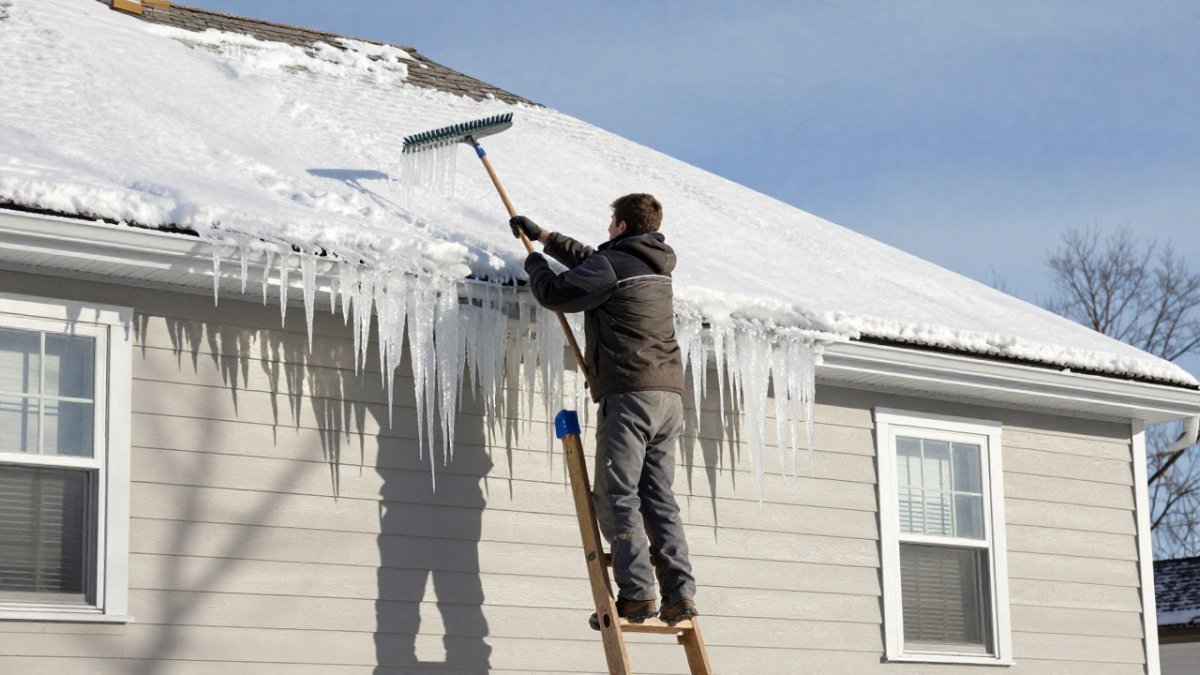
Seasonal patterns matter too. Freeze-thaw cycles and ice dams cause leaks in winter. Spring storms drive water sideways. Tracking when the leak appears narrows the leak source fast.
When to Stop Guessing and Call a Pro
Some leaks need tools and invasive checks. Call a pro when:
- The source stays hidden after tracing, the hose test, and infrared.
- Water has reached wiring, or you see mold growth.
- The roof is steep, high, or storm-damaged and unsafe to walk.
A professional inspection pinpoints the source and documents the damage for insurance. You can book a roof inspection to get an expert set of eyes, and see what a free roof damage estimate involves before you commit to anything. The National Roofing Contractors Association recommends regular inspections to catch small issues early, and the Federal Emergency Management Agency notes that documenting damage before repairs helps with claims. Meanwhile, the U.S. Department of Energy points out that sealing air leaks and moisture paths protects a home's efficiency.
Get a Free Roof Assessment From Fraley's Home Improvement
Tracking down a hidden leak is frustrating, and guessing can get expensive fast. If you would rather hand it to a team that does this every day, we can help. Fraley's Home Improvement brings over 55 years of experience, GAF-certified roofing, and free, no-pressure estimates. Get started with Fraley's Home Improvement and request your free estimate today.
A roof leak never fixes itself, and every storm that passes makes it worse. Let our family-operated team trace the source, document the damage, and give you a straight answer with no pressure. We back our work with GAF certification and a 4.9-star reputation built on word-of-mouth referrals. Get started with Fraley's Home Improvement and protect your home before the next rain.
Frequently Asked Questions
How do I identify the source of a roof leak?
Work from inside out. Look for ceiling stains, bubbling drywall, and peeling paint, then trace the water trail upward to its highest point. Check the attic for wet insulation, damp wood sheathing, and dark streaks on rafters. Match what you find to the roof exterior above that spot, inspecting shingles, flashing, vents, chimneys, and skylights. A controlled hose test or infrared scan can confirm the exact entry point before you call for repairs.
I can't find the source of my roof leak. What should I do?
Stop probing blindly and document what you see: photograph every stain, note when the leak appears, and record weather conditions. Rule out non-roof sources first, including condensation, plumbing, and clogged gutters. If the leak only shows up in heavy rain or after snow melt, note that pattern for a roofer. Hidden leaks often sit behind flashing or under shingles where water travels sideways before dripping, so a professional inspection with moisture meters and infrared tools is the reliable next step.
Can infrared tools help locate a roof leak?
Yes. Infrared cameras detect temperature differences, and wet roof materials cool differently than dry ones, so a scan can reveal hidden moisture behind ceilings, in attic decking, or along flashing. The best results come when there is a temperature gap between inside and outside, such as a cold morning or a hot afternoon. Infrared narrows the search area, but a roofer still confirms the finding with a moisture meter and a visual inspection before recommending repairs.
Can a roof leak during heavy rain even if the shingles look fine?
Yes. Shingles can look intact while water enters through failing flashing around chimneys, vents, or skylights, through worn pipe boots, or at seams where two roof planes meet. Wind-driven rain can also push water sideways under shingle edges. If leaks only appear during heavy rain, note the wind direction and which side of the house gets hit. That detail helps a roofer test the right areas instead of guessing.