 How-to
When to Replace Old Home Siding: 8 Warning Signs
Last Updated: November 24, 2026
Quick Summary
You should plan when to replace old home siding once two or more warning signs appear, such as cracks, warping, sagging, rot, mold, or peeling paint that returns after repainting. Damage covering more than a quarter of a wall, or three or more repairs in five years, usually means replacement beats repair.
- Probe soft spots with a screwdriver; if it sinks in easily, the wood or sheathing is compromised.
- Vinyl siding typically lasts 20-40 years, and fiber cement lasts 30-50 years.
- One or two damaged panels call for repair, while more than a quarter of a wall leans toward replacement.
- Installing over old siding is faster and cheaper up front but hides moisture, rot, and failed flashing.
- Ask every bidder whether the permit is included and who pulls it before you sign.
Table of Contents
- When to Replace Old Home Siding
- The 8-Point Visual Damage Checklist
- Cracks, Warping, and Other Signs Old Siding Is Failing
- How to Tell When Vinyl Siding Needs to Be Replaced
- When to Replace Wood Siding and What to Inspect First
- How Often Should Siding Be Replaced? Lifespan by Material
- Repair or Replace? A Practical Decision Framework
- Cost to Replace Siding on a 2,000 Sq Ft House
- Schedule a Free Siding Assessment
- Frequently Asked Questions
When to Replace Old Home Siding
Siding protects your home from rain, wind, and sun. When it fails, the damage moves inward, fast.
Siding rarely fails overnight. It usually gives you warnings for years.
Most people miss those warnings. They paint over peeling boards. They caulk the same crack twice. Then a small leak becomes rotted sheathing, and a repair job becomes a full replacement.
Below, we break down the eight signs that matter, how to inspect your own walls safely, and how to decide between repair and replacement.
The 8-Point Visual Damage Checklist
Start with a slow walk around your house. Bring a notepad and a pair of binoculars for the second-story walls. Check each point below.
- Cracks or holes in panels, especially near seams and corners
- Warping or bowing panels that no longer sit flat
- Sagging sections pulling away from the wall
- Missing pieces or loose panels after wind
- Peeling paint or fading that returns after repainting
- Rot or soft spots when you press with a screwdriver
- Mold or mildew streaks on or under the siding
- Interior clues like water stains on inside walls
Two or more checked boxes means it is time for a professional look. The U.S. Department of Energy guide to home exterior moisture control explains why trapped water behind siding causes most of the damage we see.
If you find several of these signs, a siding inspection in Henderson, KY gives you a clear answer on what is failing and why.
Cracks, Warping, and Other Signs Old Siding Is Failing
Cracks and warping are the first visible stage of siding failure. They let water in and hold it there.
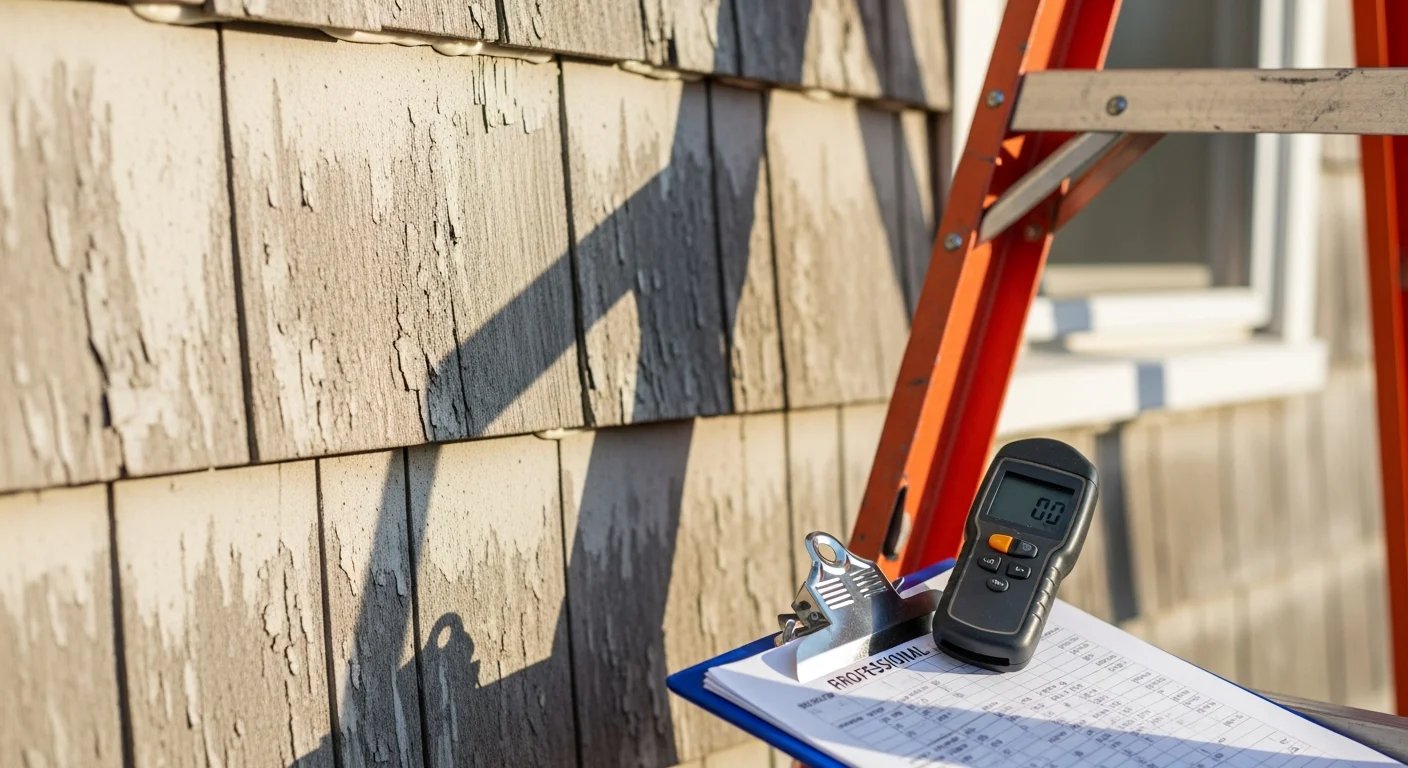
Watch for these specific patterns:
- Hairline cracks near nail heads, which grow with freeze-thaw cycles
- Bubbling or blistering paint that hides moisture underneath
- Panels that ripple in strong sun, a sign of heat damage
- Loose seams where two panels meet and gap
- Chalking on vinyl, a white powder that signals UV breakdown
A common mistake is caulking over a crack without finding the source. Water keeps working behind the patch. Six months later, the same spot fails again.
Rot, Mold, and Water Damage Behind the Panels
Rot and mold behind panels are the most expensive signs to ignore. They mean water has already passed the siding.
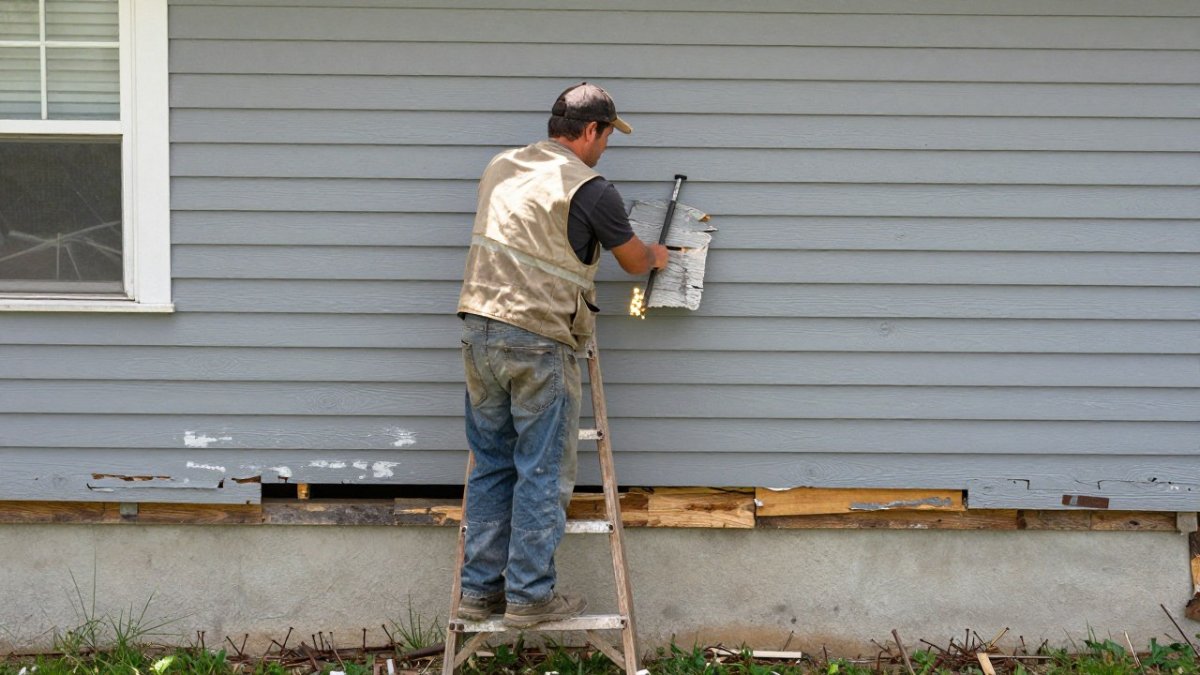
Probe any soft spot with a screwdriver. If it sinks in easily, the wood or sheathing is compromised. Look for dark stains, musty smells near vents, and paint that peels in a straight line.
Hidden damage often shows up inside first. Check ceilings and interior walls after heavy rain. Water intrusion behind siding can rot wall sheathing and framing before you see a single crack outside.
How to Tell When Vinyl Siding Needs to Be Replaced
Vinyl siding needs replacement when panels crack, warp, or come loose and the damage covers more than a small area. Vinyl is durable but not permanent, and sun exposure breaks it down over time.
Here is how to tell when vinyl siding needs to be replaced:
- Brittle panels that crack when pressed
- Widespread warping from heat or poor installation
- Fading that will not wash off, a sign the color layer is gone
- Loose panels that rattle in wind
- Moisture trapped behind panels with no drainage path
One cracked panel near a corner is a repair. Warping across a whole wall usually means the end of the material's useful life. Poor installation makes vinyl fail early, especially when panels are nailed too tight and cannot expand.
When to Replace Wood Siding and What to Inspect First
Wood siding needs replacement when rot spreads beyond isolated boards or paint fails repeatedly despite proper prep. Wood is the most moisture-sensitive common siding material.
Inspect these areas first:
- Bottom rows near the ground, where splash-back hits hardest
- Around windows and doors, where caulk joints fail
- Under gutters, where overflow soaks the wall
- North-facing walls, which dry slowest
Press a screwdriver into the wood at each spot. Soft wood means rot. Peeling paint that returns within a year or two usually signals moisture moving through the board, not a paint problem.
How Often Should Siding Be Replaced? Lifespan by Material
Siding lifespan depends on material, climate, and installation quality. Material choice sets the ceiling. Installation and weather decide how close you get to it. A table alone will not tell you whether your siding is near the end, you need the maintenance pattern and failure mode for your specific material.
| Siding Material | Typical Lifespan | Maintenance Level | Watch For |
|---|---|---|---|
| Vinyl | 20-40 years | Low | Cracking, warping, fading |
| Wood | 20-40 years with care | High | Rot, peeling paint, pests |
| Fiber cement | 30-50 years | Moderate | Cracks, failed paint at seams |
| Aluminum | 20-40 years | Low | Dents, fading, loose panels |
| Brick veneer | 50+ years | Low | Cracked mortar, water stains |
What Each Material Actually Demands
Vinyl. Washing it periodically and inspecting seams and nail heads after significant wind events helps catch problems early.
Wood. Wood needs regular paint or stain, and more often on walls that take the most sun.
Fiber cement. Fiber cement holds paint longer than wood but still needs periodic repainting.
Aluminum. Aluminum does not rot, but it dents, and its factory finish chalks and fades over decades.
Brick veneer. Brick itself lasts generations, but the mortar joints and the flashing behind the veneer are the weak points.
Why Two Houses with the Same Siding Age Differently
Climate and installation explain most of the spread.
Installation quality matters just as much. Flashing that directs water away from seams, a properly lapped housewrap, and fasteners that allow for expansion all extend service life. Vinyl nailed too tight cannot move with temperature swings and will buckle or crack.
Watch out: a generic lifespan number is an average, not a verdict on your house.
Repair or Replace? A Practical Decision Framework
Use this framework to decide. Answer each question in order.
- How much area is damaged? One or two panels: repair. More than a quarter of a wall: lean toward replacement.
- Is the damage recurring? Repeated repairs in the same spot mean the cause was never fixed.
- Is the material near end of life? If the siding is past its expected lifespan, repairs are money into a losing wall.
- Is there hidden damage? Rot in sheathing or framing changes the math toward replacement.
- How many repairs in five years? Three or more usually means replacement is cheaper long term.
If you land on repair, siding repair in Henderson, KY covers storm damage, moisture issues, and aging exteriors. If replacement wins, plan the scope before you commit.
Cost to Replace Siding on a 2,000 Sq Ft House
Replacement cost depends on material, damage underneath, and how much trim and flashing needs work. What we can do is show you how a real estimate is built, so you can compare bids on equal terms instead of on the bottom-line number alone.
What Drives the Cost
- Material choice, the biggest single factor. Vinyl sits at the low end, fiber cement in the middle, and wood and brick veneer at the high end, both in material and in labor.
- Hidden damage to sheathing or framing. Rot discovered after removal is the most common reason a job exceeds its initial estimate.
- Trim, soffit, and fascia work. These are often priced separately and can rival the siding itself on a house with extensive trim.
- Window and door flashing upgrades. Re-flashing openings is the detail that prevents the next round of water damage.
- Access and height, which affect labor. Two-story walls, steep grades, and tight lots add scaffolding and time.
- Removal and disposal. Tearing off old siding, hauling it away, and disposing of it is labor and fees that installation-over-existing avoids, at a cost.
Removal Versus Installing Over Existing Siding
Installing new siding over the old is faster and cheaper up front, but it hides whatever is behind the old layer. If the existing siding has trapped moisture, rot, or failed flashing, covering it locks the problem in place. Removal lets the contractor inspect sheathing, replace rotten sections, and correct flashing, which is why a full tear-off usually costs more but produces a more reliable wall. Ask each bidder which approach they recommend and why.
Permits, Timing, and Scope
Most exterior siding work requires a permit, and the requirements vary by jurisdiction. Ask whether the permit is included in the bid and who pulls it. Timing matters too: siding work is weather-dependent, and scheduling around rainy seasons affects both cost and quality. A written scope should state what is removed, what is replaced, what is flashed, what is caulked, and what happens if rot is found mid-job.
Questions to Ask Every Bidder
- What is the exact scope, line by line?
- Is the permit included, and who pulls it?
- How is hidden rot priced if it is found after removal?
- What is the manufacturer's warranty, and what is the labor warranty?
- Will the crew remove and dispose of the old siding?
- How will flashing at windows, doors, and rooflines be handled?
Get a written scope, not just a number. A transparent contractor prices the possibility of hidden damage up front rather than surprising you with a change order. Our siding replacement in Henderson, KY service page explains what a full replacement includes.
Schedule a Free Siding Assessment
You do not have to guess. A professional assessment answers the repair-or-replace question in one visit.
Before you book, read our guide to hiring local siding contractors in Kentucky. It covers the questions that separate a solid contractor from a risky one.
Then get a free estimate from Fraley's Home Improvement.
Your siding is the first line of defense for everything inside your walls. If you have spotted cracks, rot, or water stains, do not wait for the next storm to make the decision for you.
Frequently Asked Questions
How do I know if my siding needs to be replaced or just repaired?
It comes down to damage extent and how often problems return. A few cracked or loose panels on an otherwise sound wall are usually a repair. Replace old siding when damage covers large sections, water has reached the wall sheathing, or you have paid for the same fix more than twice in a few years. A professional inspection helps confirm whether the damage is surface-level or structural.
Can vinyl siding last 50 years?
Some vinyl products carry 50-year warranties, but that is a maximum under good conditions, not a typical outcome. In practice, vinyl siding lifespan depends on sun exposure, installation quality, and how well it was maintained. Fading, brittleness, and loose panels usually show up well before the warranty runs out, so judge by condition rather than the calendar.
What should I do if I find water damage behind my siding?
Stop the source first, then assess the scope. Document the damage with photos, check the wall sheathing for soft spots or rot, and look for mold or mildew on the framing. Small areas of moisture intrusion can often be dried and repaired, but soft sheathing or widespread rot needs professional evaluation before new siding goes back on. Covering wet framing traps the problem and leads to repeated repairs.
Does new siding actually lower energy bills?
New siding can improve energy efficiency when it includes a continuous insulation layer or replaces failing panels that let drafts through. The savings depend on what is behind the siding now and how airtight the wall assembly is. Treat energy savings as a secondary benefit, not the main reason to replace, and ask your contractor what insulation the project includes.