 How-to
Identifying Roof Hail Damage Signs: What to Look For
Last Updated: November 17, 2026
Quick Summary
Identifying roof hail damage means looking for random, clustered signs: knocked-off granules, bruised shingle mats, and cracked or punctured material. Hail damage hits some shingles and skips the ones next to them, unlike the even wear of an aging roof. Check gutters for loose granules and soft metals like vents and flashing for dents.
- Hail damage looks random and fresh, while normal aging looks even and gradual across the roof.
- Collect a handful of granules from gutters and downspout outlets as a strong early clue.
- Inspect from the ground and windows, and leave roof walking to someone with fall protection.
- Photograph every sign with a date, keep a written log, and save receipts for temporary repairs.
- Metal roofing hides damage best, so have it inspected after a significant storm even if it looks clean.
Table of Contents
- What Hail Damage on Roof Shingles Actually Looks Like
- How to Tell Hail Damage Apart From Normal Aging and Wear
- Soft-Metal and Exterior Signs: Vents, Flashing, Gutters, and Siding
- Your Roof Hail Damage Checklist for a Safe Inspection
- Material-Specific Signs for Asphalt, Metal, Tile, and Wood Roofs
- Documenting Damage and Handling an Insurance Hail Damage Roof Claim
- Get a Free Roof Assessment From a GAF-Certified Team
- Frequently Asked Questions
What Hail Damage on Roof Shingles Actually Looks Like
Identifying roof hail damage signs starts with knowing what a fresh impact looks like, not what an old one looks like. Hail damage on roof shingles is physical damage from hailstones striking the roof surface: knocked-off granules, bruised shingle mats, and cracked or punctured material. After storms, damage patterns on roofs tend to be consistent. Damage clusters where hail hit hardest, and it rarely looks like the even, all-over wear of an aging roof.
Here's the key insight most homeowners miss: hail damage is random. It hits some shingles and skips the ones right next to them. That randomness is your best clue.
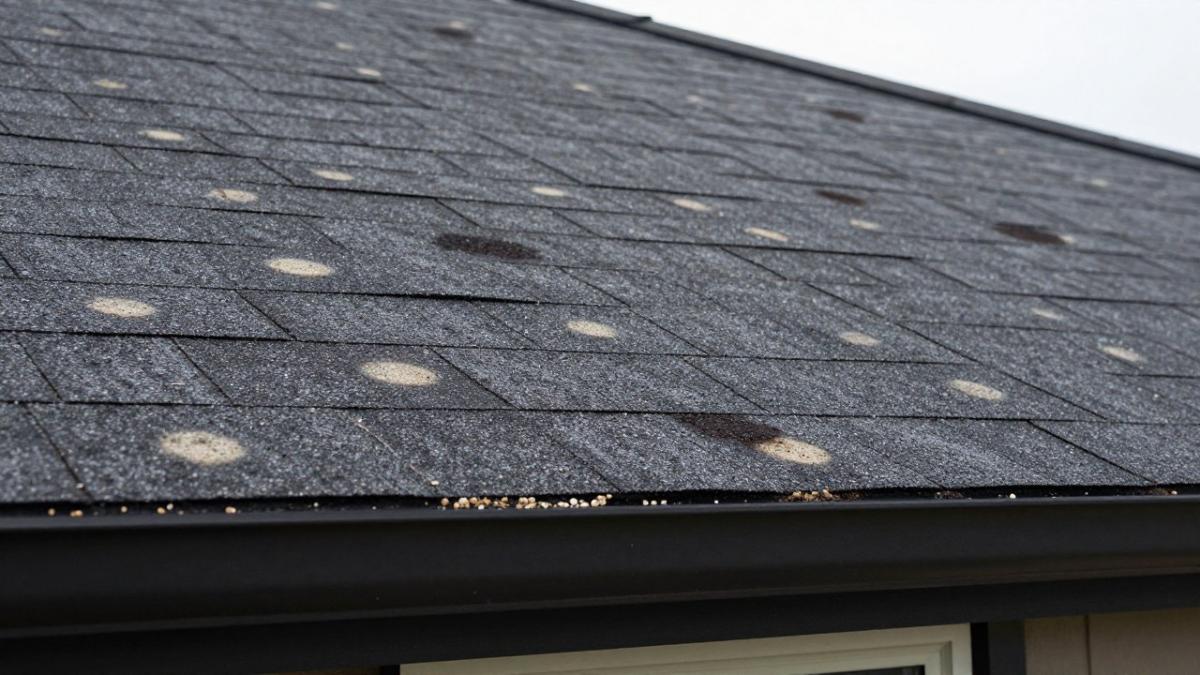
Granule Loss and Exposed Roofing Material
Granules are the gritty top layer of asphalt shingles. They shield the asphalt from sun and rain. When hailstones hit, they knock granules loose. You'll find them in gutters and at downspout outlets.
Look for dark, smooth patches where granules are gone. If you can see the roof mat or roof felt underneath, that shingle has lost its protection. Exposed roofing material ages fast and starts to leak.
Bruises, Dents, Cracks, and Breaks in Shingles
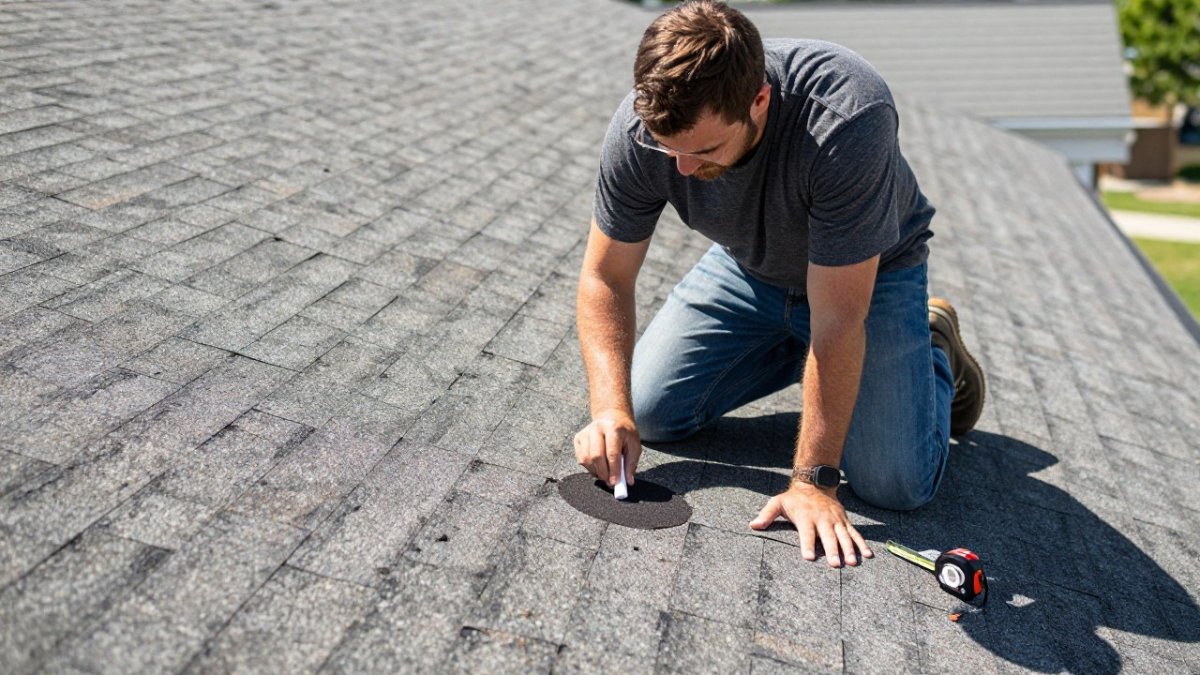
A bruise is a soft spot where the shingle mat got crushed. It looks like a dark dimple. Press gently nearby and compare: bruised areas feel softer.
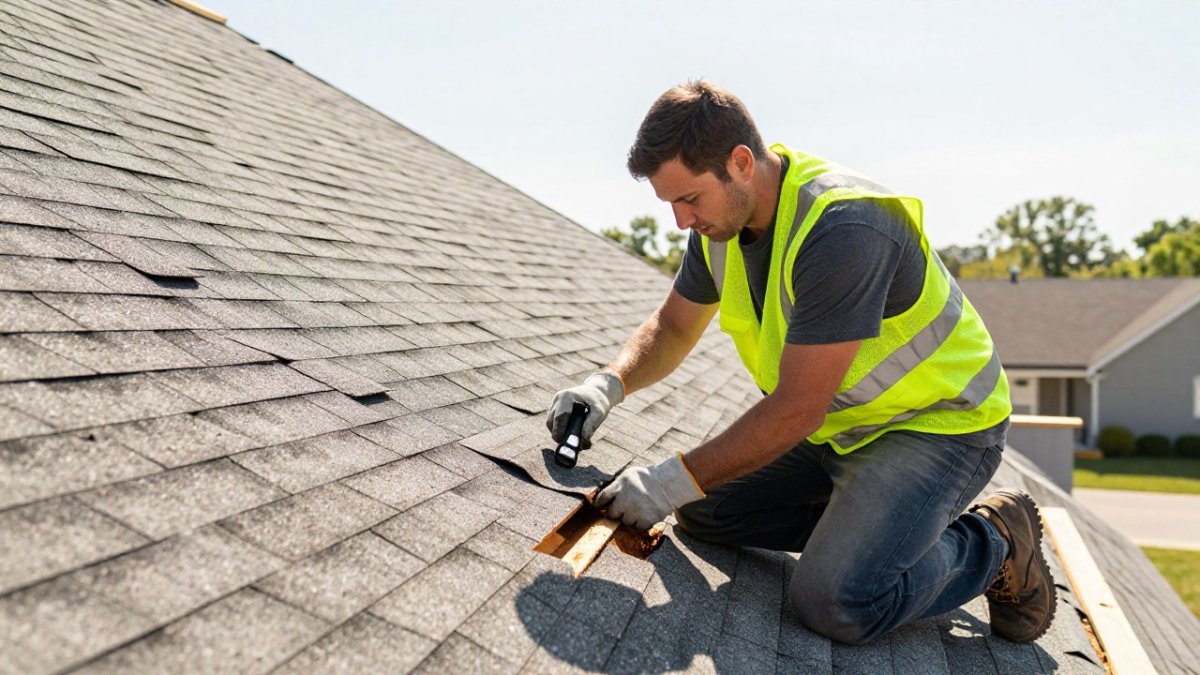
Cracks and breaks are more obvious. Hail can split a shingle or punch a hole clean through. Check the shingle edges and the ridge too. Impact marks show up as dings and punctures, not just surface scuffs.
How to Tell Hail Damage Apart From Normal Aging and Wear
Hail damage looks random and fresh. Normal aging looks even and gradual. That's the short answer, and it settles most disputes.
Here's how the two compare:
| Sign | Hail Damage | Normal Aging |
|---|---|---|
| Pattern | Random, clustered | Even across the roof |
| Granule loss | Patchy, fresh | Gradual, widespread |
| Shingle surface | Bruises, dimples, cracks | Curling, blistering, brittleness |
| Timing | After a storm | Builds over years |
Watch out: foot traffic and blistering get blamed on hail all the time. Foot traffic leaves scuffs in a walking line. Blisters look like small raised bubbles, not dents. Neither is storm damage, and an adjuster will spot the difference.
Soft-Metal and Exterior Signs: Vents, Flashing, Gutters, and Siding
Soft metals tell the story when shingles are ambiguous. Aluminum and copper dent easily, so they record every hailstone. Check roof vents, flashing, gutters, and downspouts first.
Dents, dings, and dimples on metal are strong proof of hail size and direction. Gutters take hits on top edges and downspouts. Siding, windows, and trim show cracks, chips, and screen damage.
If your gutters took a beating, gutter services in Henderson, KY can repair or replace them before water damage starts.
Your Roof Hail Damage Checklist for a Safe Inspection
Safety comes before curiosity. A wet, steep, or already damaged roof is not a do-it-yourself surface, and most post-storm roof injuries happen to homeowners who climbed up to "take a quick look." A safe approach is to inspect from the ground and from a window, and leave any walking of the roof to someone with fall protection and the right shoes.
Work through this roof hail damage checklist from the ground, in order:
- Check gutters and downspout outlets for loose granules, collect a handful and look at the color and size; fresh asphalt granules are a strong early clue
- Look for dark patches, shiny spots, or bare mat on shingles visible from the yard
- Inspect roof vents, flashing, and gutter edges for dents and dimples
- Scan siding, windows, and window screens for cracks, chips, and punctures
- Note tree damage and ask neighbors what hail size they saw, hail reports help establish the storm date
- Photograph everything with a phone before touching anything, and keep the original files
- Call a professional for anything above ground level
What to Check From the Ground First
Start at the perimeter and work clockwise. At each corner, look up the slope and along the ridge. Granules in gutters, dents on downspouts, and torn window screens confirm hail hit the property even before you see the roof surface. Then use binoculars from a stable spot, not from a ladder, to scan the roof plane for random dark spots, dented vents, and missing shingle tabs.
Watch out: a ladder leaned against a gutter is the most common way homeowners get hurt after a storm; the gutter is often loose or full of water, and the ladder can slide. If you cannot see a suspect area from the ground or a window, that is the point to stop.
When Not to Climb, and What to Do Instead
Skip the roof entirely if any of these are true: the roof is wet, icy, or covered in debris; the pitch is steep or the roof has multiple levels; you see sagging, soft spots, or loose shingles; you are alone; or you have no fall-protection gear. In those cases, call a roofing professional and ask for a documented inspection. A trained inspector can walk the roof safely and provide a written record you can share with your insurer. A documented inspection can also help distinguish hail impacts from other signs of storm damage, so ask Hurtado's Roofing what evidence to record before sharing your findings with your insurer.
If you spot signs from the ground, stop there. When you're ready for a professional look, book a roof inspection and let a trained eye confirm what you found.
Material-Specific Signs for Asphalt, Metal, Tile, and Wood Roofs
Each roofing material fails differently in hail, and the same stone that bruises asphalt can crack tile or dent metal without leaving a mark on the other. Knowing your material tells you where to look and what a real impact looks like.
Asphalt shingles. The mat is a fiberglass or organic core coated in asphalt and topped with mineral granules. Hail knocks granules loose, bruises the mat, and can crack or puncture the shingle. Look for random dark spots, bare patches where the mat shows through, and granules in the gutter. Bruises feel soft when pressed gently, compare a suspect spot to the shingle beside it. Fresh granule loss is the most reliable early sign.
Metal roofing. Steel and aluminum panels dent rather than crack. Dents show best in low sunlight, when the panel is viewed at a shallow angle; at midday they can disappear. Check panel flats, ribs, and fasteners, loosened fasteners and scratched paint are common after hail. A magnet can help you tell steel from aluminum, but the practical test is visual: look along the panel for dimples and ripples.
Tile roofs. Clay and concrete tile are brittle. Hail chips corners, cracks tiles, and can displace pieces. Cracks often start small and spread with freeze-thaw cycles, so a hairline crack after a storm is worth recording. Check the field of the roof, the ridge, and the valleys, where displaced tiles tend to collect.
Wood shakes and shingles. Wood splits along the grain and bruises where the hailstone crushed the fibers. Look for fresh splits, punctures, and splintered surfaces, and compare them to the gray, checked look of normal weathering. Rot is soft and dark; hail damage is fresh and sharp-edged.
Watch out: metal roofing hides damage better than any other material, and a homeowner who sees no dents from the ground may still have loosened fasteners or cracked sealant that only shows up in the rain. If your roof is metal and the storm was significant, have it inspected even when the surface looks clean.
If shingles are cracked or broken beyond repair, roof replacement in Henderson, KY may be the better path than repeated patches.
Documenting Damage and Handling an Insurance Hail Damage Roof Claim
Documentation wins claims. Photograph every sign with a date, keep a written log, and save any receipts for temporary repairs. Don't throw away damaged materials.
Then call your insurer and request an adjuster visit. Be present for it. Point out the soft-metal dents and granule loss, because those support the shingle findings.
Most policies cover sudden storm damage but not normal wear. That distinction is exactly why the aging-versus-hail comparison matters. For the full recovery process, follow our roof repair after hail damage guide step by step.
Get a Free Roof Assessment From a GAF-Certified Team
Honest assessments beat guesswork. Fraley's Home Improvement has served homeowners since 1971 as a family-operated, GAF-certified team. We give free, no-pressure estimates to help you make the right choice for your home.
Our team is BBB A+ rated with a 4.9 Google rating across 91+ reviews. If you've found suspected hail damage, don't wait for the next storm to make it worse. Get a free roof damage estimate and know exactly where your roof stands.
A storm leaves clues, but reading them takes training and a safe vantage point. If your inspection turned up dents, granule loss, or cracked shingles, let Fraley's Home Improvement confirm the damage, document it for your claim, and recommend only the work your roof actually needs. We bring GAF-certified craftsmanship, free no-pressure estimates, and 55+ years of honest work to every assessment. Get started with Fraley's Home Improvement and protect your home before the next storm hits.
Frequently Asked Questions
How can you tell if your roof has hail damage?
Start with the signs you can see from the ground: dents in gutters and downspouts, dented vent caps, and granules collecting at the base of downspouts. On the roof itself, look for dark bruises on shingles, exposed roof mat where granules are gone, and cracks or breaks in a random pattern. Hail damage rarely follows a neat line, so scattered impact marks across the roof surface are a strong signal. If you find any of these, have a professional inspection before filing a claim.
Can hail damage a roof without causing a leak?
Yes. Many hail-damaged roofs do not leak right away. Granule loss and bruised shingles weaken the roof surface, but water may take months or years to work through the roof felt and mat. That delay is why a roof hail damage checklist matters: catching shingle damage early lets you document it for an insurance claim and repair it before water gets inside. A roof that looks fine from the driveway can still have impact marks that shorten its service life.
Should you call a roofer or your insurance company first after hail damage?
Call a roofing professional first for an inspection. A professional inspection can help you assess the damage before you contact your insurer. Insurers also expect you to mitigate further damage, so a quick assessment protects you. Fraley's Home Improvement offers free, no-pressure estimates and can walk you through what the inspection found before you contact your carrier.
What should you do if you find possible hail damage on your roof?
Do not climb onto the roof to investigate. Photograph what you can see safely from the ground, note the date of the storm and the size of the hailstones, and keep any fallen granules or damaged gutter pieces. Then schedule a professional roof inspection. Documenting damage early, before repairs or weather change the evidence, is the single most useful step for an insurance claim and for getting the repair done right.