 How-to
Roof Repair After Hail Damage: A Step-by-Step Recovery Plan
Last Updated: October 30, 2026
Quick Summary
After hail, stay off the roof, document the storm date and any visible damage from the ground, and open an insurance claim before scheduling roof repair. A professional inspection then determines whether isolated damage can be repaired or the roof needs replacement.
- Photograph wide shots first, then close-ups, and keep a written log of every call and adjuster visit.
- An emergency tarp is temporary mitigation, and most policies treat it as a covered cost.
- Repair usually wins when damage is isolated to a few shingles or one slope.
- Most hail damage roof repairs take one to three days once materials arrive and the claim is approved.
- Verify licensing, insurance, and manufacturer certification before hiring a roofing contractor.
Table of Contents
- First Steps After a Hailstorm Hits Your Roof
- Signs of Hail Damage on a Roof You Can Spot From the Ground
- How to Document Hail Damage for Insurance
- Emergency Roof Tarp After Hail: Stopping Water Intrusion Fast
- Repair or Replace? Deciding After a Professional Inspection
- How Long Does Hail Damage Roof Repair Take?
- Choosing a Roofing Contractor and Checking the Finished Work
- Get a Free Roof Assessment From Fraley's Home Improvement
- Frequently Asked Questions
First Steps After a Hailstorm Hits Your Roof
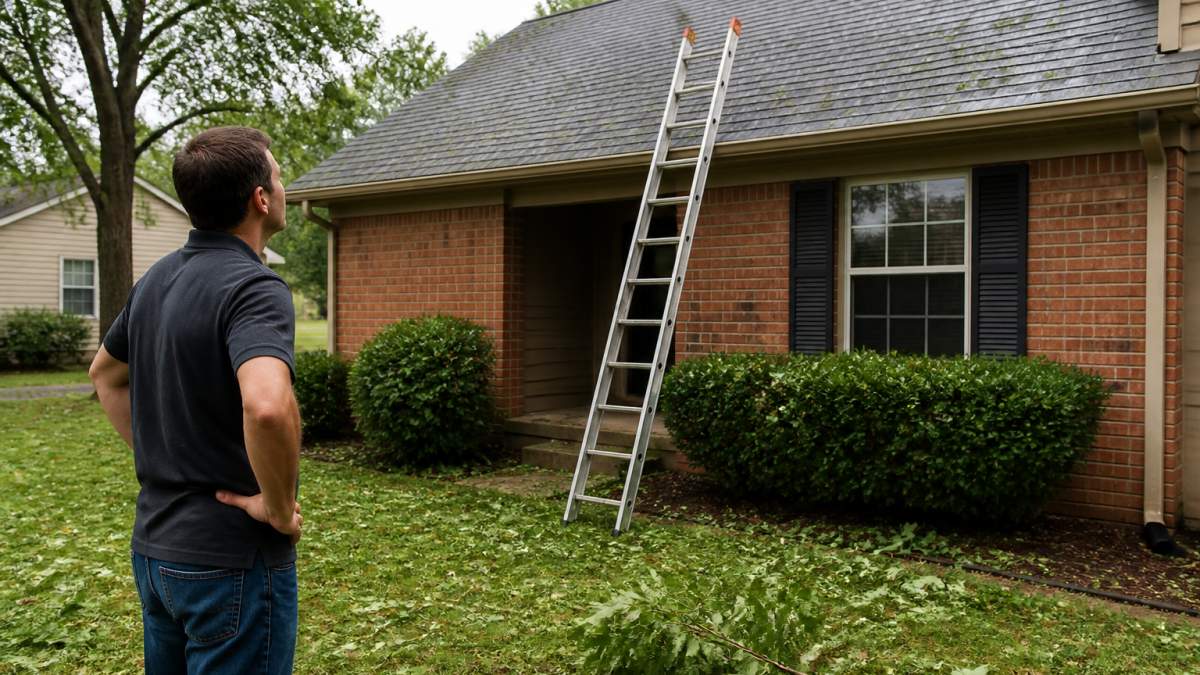
The first thing to do after a hailstorm is stay off the roof and document what you can see from the ground. Hail damage is often invisible from a ladder and dangerous to chase. Homeowners who record everything first are generally better positioned when they file claims and schedule repairs.
Here's the order we recommend:
- Note the date and time of the storm, plus the approximate size of the hailstones you saw.
- Photograph your yard, driveway, and any vehicles for comparison stones.
- Check ceilings and attic space for active drips before anything else.
- Call your insurance company to open a claim file, even if you're unsure about damage.
- Keep every receipt for tarps, buckets, or emergency materials.
A common mistake is climbing up to "take a quick look." Wet shingles and hail-loosened granules make a slick surface, and a fall costs far more than a repair. Ground-level observation plus a professional inspection covers what you need.
Signs of Hail Damage on a Roof You Can Spot From the Ground
You can spot hail damage on a roof from the ground by watching for granule piles in gutters, dented metal, and dark spots on shingles. Binoculars help. So does a phone camera with zoom.
Look for these signals:
- Granule loss: asphalt shingle granules collecting at downspout outlets or in gutter troughs
- Dented metal: soft spots or dimples on metal roofing, vents, flashing, and gutter aprons
- Bruised shingles: dark, soft-looking patches where impact knocked the protective surface loose
- Cracked or lifted shingles: edges that curl or split after impact
- Damaged accessories: cracked vent covers, skylight frames, or ridge caps
Fresh hail hits often look different from old wear. A trained eye checks for impact marks with soft edges and exposed mat underneath, not just missing granules.
What Damage Looks Like by Roofing Material
Hail does not damage every roof the same way, and the material on your house determines what to look for, what an inspector will test, and what a repair involves.
Asphalt shingles. The most common roof in the U.S., and the one where hail damage is easiest to miss. Impacts knock granules loose and bruise the fiberglass mat underneath.
Metal roofing. Hail leaves dents, and dents are only the beginning.
Clay and concrete tile. Tile is brittle. Hail can chip corners, crack field tiles, and, critically, crack the underlayment beneath tiles that look fine from above.
Wood shakes and shingles. Hail cracks and splits wood along the grain and can bruise the felt underlayment.
Flat and low-slope membrane roofs. Built-up, modified bitumen, and single-ply membranes show hail damage as punctures, blisters, and bruised spots that feel soft underfoot.
Knowing your material tells you what to point out to an inspector and what your insurance adjuster will be looking for. It also tells you which repairs are simple swaps and which risk voiding a manufacturer warranty if done piecemeal.
How to Document Hail Damage for Insurance
Documenting hail damage for insurance means building a dated, organized record before anything gets repaired or replaced. Insurers respond to evidence, not adjectives.
Build your file in this order:
- Photograph wide shots first, then close-ups. Include the house number or a landmark in one frame.
- Capture the hail itself if it's still on the ground, next to a ruler or a coin for scale.
- Photograph interior damage: ceiling stains, attic moisture, wet insulation.
- Save storm reports from local news or weather services with the date.
- Keep a written log of every call, claim number, and adjuster visit.
Our step-by-step guide on how to get a free roof damage estimate walks through the same documentation sequence we use on site, so your file is ready before the adjuster arrives.
Claim Deadlines, Exclusions, and Depreciation
Insurance policies set their own deadlines, and they vary by carrier and state. Some require notice within a short window after the storm; others allow longer. Read your policy's "duties after loss" section, or ask your agent for the filing deadline in writing.
Two terms decide how much you collect:
- Deductible: the amount you pay before coverage kicks in. A higher deductible means a smaller claim payout.
- Depreciation: insurers often pay actual cash value first, which subtracts wear from your roof's age, then release recoverable depreciation after the work is complete.
Watch out: missing a notice deadline or skipping the mitigation steps in your policy can reduce or void a legitimate claim. Ask your adjuster to confirm both in writing before work begins.
Emergency Roof Tarp After Hail: Stopping Water Intrusion Fast
An emergency roof tarp after hail is a temporary cover that stops water intrusion until permanent repairs can be scheduled. It buys time. It does not fix anything.
When water is already coming in, act in this sequence:
- Move valuables and furniture away from the leak
- Place buckets and towels, and photograph the water damage before cleanup
- Call a roofing professional for tarping, since walking a hail-damaged roof is risky
- Keep the tarp receipt, because most policies treat mitigation as a covered cost
If you're trying to pinpoint where the water is entering, our guide on finding a roof leak source explains how to trace it from the attic side without climbing on damaged shingles.
Record the tarp date and location. Adjusters use mitigation records to separate storm damage from damage that happened later.
Repair or Replace? Deciding After a Professional Inspection
Repair usually wins when damage is isolated to a few shingles or one slope.
1. Extent of damage. Is the damage concentrated on one slope or scattered across multiple elevations?
2. Roof age and remaining service life. Asphalt shingles typically carry a manufacturer warranty of 20 to 30 years, but useful life depends on ventilation, sun exposure, and installation quality.
3. Material availability and matching. Can the damaged shingles or tiles be matched?
4. Warranty and manufacturer requirements. Some manufacturer warranties require repairs by a certified contractor, and some void coverage if damage is repaired rather than replaced in certain conditions.
5. Insurance scope and depreciation. An adjuster's scope of work and a contractor's assessment should line up before you commit.
**6.
For homeowners in our service area, you can schedule a roof inspection in Henderson, KY and get a written assessment instead of a sales pitch. If the verdict is replacement, the details on full roof replacement cover what the project involves from tear-off to final inspection.
Getting an inspection before signing anything is a sound step. Be cautious of any contractor who proposes replacement without examining the attic and flashing.
How Long Does Hail Damage Roof Repair Take?
Most hail damage roof repairs take one to three days once materials arrive and the claim is approved. The full timeline from storm to finished repair usually runs several weeks, and the slow parts are rarely the hammering.
| Stage | Typical Duration | What Drives It |
|---|---|---|
| Claim filing and adjuster visit | 1-3 weeks | Carrier workload, documentation quality |
| Scope agreement and material order | 1-2 weeks | Shingle availability, color selection |
| Active repair work | 1-3 days | Extent of damage, weather, roof size |
| Final inspection and depreciation release | 1-2 weeks | Completed-work documentation |
Weather delays and material backorders stretch the middle stages. A well-documented claim shortens the front end considerably, which is why the photo file matters so much.
Choosing a Roofing Contractor and Checking the Finished Work
Choose a roofing contractor by verifying licensing and insurance, getting a written scope, and confirming who will actually be on your roof. Then check the finished work before you make the final payment.
Use this checklist:
- Local business with a verifiable address and phone number
- Proof of liability insurance and workers' compensation
- Manufacturer certification, such as GAF certification, for warranty eligibility
- Written estimate with materials, labor, and cleanup listed separately
- No large upfront deposit demand
- Lien waivers from material suppliers on request
After the work, inspect for straight ridge lines, uniform shingle alignment, clean gutters, and no nails in the yard. Ask for the manufacturer warranty paperwork in writing. A crew that disappears before the final walkthrough is a warning sign.
Fraley's Home Improvement has served western Kentucky and the tri-state area since 1971 as a family-operated, GAF Factory Certified company.
Get a Free Roof Assessment From Fraley's Home Improvement
The hardest part of hail damage isn't the repair. It's knowing whether you have a real claim or a cosmetic scare, and getting a straight answer before a deadline passes.
Fraley's Home Improvement offers free, no-pressure estimates, with more than 55 years in business and a 4.9 rating across 91+ Google reviews. Fraley's Home Improvement offers roofing, siding, window, and gutter services.
Request your free estimate and get a clear assessment of your roof's condition, in writing, with no obligation.
Frequently Asked Questions
How can you tell if your roof has hail damage?
Look for dented shingles, granule loss on asphalt shingles, dents in metal roofing, and damaged flashing or gutters. From the ground, check downspouts for piles of granules and look for dark spots where the mat is exposed. Hail damage often looks minor from a distance, so a professional inspection is the reliable way to confirm it. A roofing professional can check the slopes and soft metals you cannot safely reach.
Is it worth filing an insurance claim for hail damage?
It depends on the damage compared with your deductible. If the repair estimate is close to or below your deductible, paying out of pocket may make more sense. If shingles are dented, granules are gone, or water is getting in, the claim is usually worth filing. Document everything with photos before any temporary repairs, and read your policy for deadlines and exclusions first.
How long does hail damage roof repair take?
A small repair, such as replacing a few shingles or patching flashing, often takes a few hours to a day. A full roof replacement typically takes one to three days for an average home, depending on size, pitch, and weather. Insurance approval can add one to several weeks before work starts. Ask your contractor for a written timeline before signing.
Should you repair or replace a roof after hail damage?
Repair makes sense when damage is limited to a few shingles or one area and the roof is otherwise in good condition. Replacement is usually the better call when damage is widespread, the roof is near the end of its service life, or granules are gone across multiple slopes. A professional inspection with photo documentation gives you the evidence to decide.
Hail season doesn't announce itself, and the homeowners who come out ahead are the ones who documented early and called a professional before the first drip. Get started with Fraley's Home Improvement and get a written assessment of your roof from a team that has protected homes in this region for more than five decades.