 listicle
Hiring Local Siding Contractors in Kentucky: 2026 Guide
Last Updated: October 23, 2026
Quick Summary
Hiring local siding contractors in Kentucky protects your home because a nearby crew can return for warranty claims, follow-up repairs, and weather delays. Ask five questions before signing: licensing and insurance, project timeline, warranty terms, payment schedule, and who handles punch-list repairs. Compare bids by itemized scope, not just price.
- A typical siding replacement on a single-family home runs one to three weeks from material delivery to final walkthrough.
- Never pay the full amount upfront, and get the payment schedule with milestones in writing.
- A siding warranty has two parts: the manufacturer covers the material and the contractor covers the installation.
- A bid that lists only a lump sum with no material breakdown is nearly impossible to compare against others.
- Fraley's Home Improvement has served western Kentucky and the tri-state area since 1971.
Table of Contents
- Why Hiring Local Siding Contractors in Kentucky Matters
- Siding Contractor Questions to Ask Before You Sign
- Your Siding Installation Estimate Checklist
- What a Realistic Siding Installation Timeline Looks Like
- Siding Contractor Warranties: What to Read Before You Sign
- How to Compare Bids From Local Siding Contractors in Kentucky
- Conclusion
- Frequently Asked Questions
Why Hiring Local Siding Contractors in Kentucky Matters
Hiring local siding contractors in Kentucky is the single most reliable way to protect a home from the weather swings this region throws at it. At Fraley's Home Improvement, we have watched too many homeowners learn that lesson the hard way after an out-of-state crew disappeared mid-project. Local matters because siding is not a one-day transaction. It is a relationship with warranty claims, follow-up repairs, and weather delays that stretch across seasons.
Here is the part most guides get wrong: they treat "local" as a feel-good label. It is not. A contractor based within driving distance can return to fix a loose panel, honor a workmanship warranty, and know which suppliers actually stock the material you need. A crew that packed up and left cannot do any of that.
Below, we walk through the questions, checklists, and comparisons that separate a solid local contractor from a smooth talker. The difference shows up years after the final invoice.
Siding Contractor Questions to Ask Before You Sign
Ask any siding contractor five questions before signing: licensing and insurance, project timeline, warranty terms, payment schedule, and who handles punch-list repairs. The answers reveal more than any glossy brochure. Vague responses are your warning sign.

The questions that matter most:
- Are you licensed and insured? Ask for the certificate, not a verbal yes.
- Who is on the crew? Employees or day labor? It affects accountability.
- What is the payment schedule? Never pay the full amount upfront (How To Avoid a Home Improvement Scam).
- How do you handle change orders? Get the process in writing.
- What happens if I find a defect in year three? The answer tells you whether the warranty is real.
A common mistake is asking these questions after the deposit clears. Ask them before, and ask them in writing.
Your Siding Installation Estimate Checklist
A siding installation estimate checklist should cover scope, materials, labor, cleanup, and warranty terms in one document. If a bid omits any of these, it is incomplete, no matter how clean the number looks.
Compare every estimate against this list:
- Material brand, style, and thickness specified
- Square footage of siding to be installed
- Removal and disposal of old siding included
- Underlayment and house wrap listed
- Trim, soffit, and fascia scope stated
- Labor broken out from materials
- Permit responsibility named
- Cleanup and dumpster fees included
- Warranty terms in writing
- Payment schedule with milestones
The FTC guidance on home improvement contracts reminds homeowners that a written contract should spell out the work, the price, and the payment terms. Missing line items become surprise charges later.
What a Realistic Siding Installation Timeline Looks Like
A typical siding replacement on a single-family home runs one to three weeks from material delivery to final walkthrough, depending on house size, weather, and how much rot the crew finds underneath. Anyone promising a two-day full replacement is either cutting corners or guessing.
The sequence usually looks like this:
- Week 1: Material delivery, staging, and removal of old siding
- Week 1-2: Inspection of sheathing and repair of any rot or water damage
- Week 2: House wrap, flashing, and insulation work
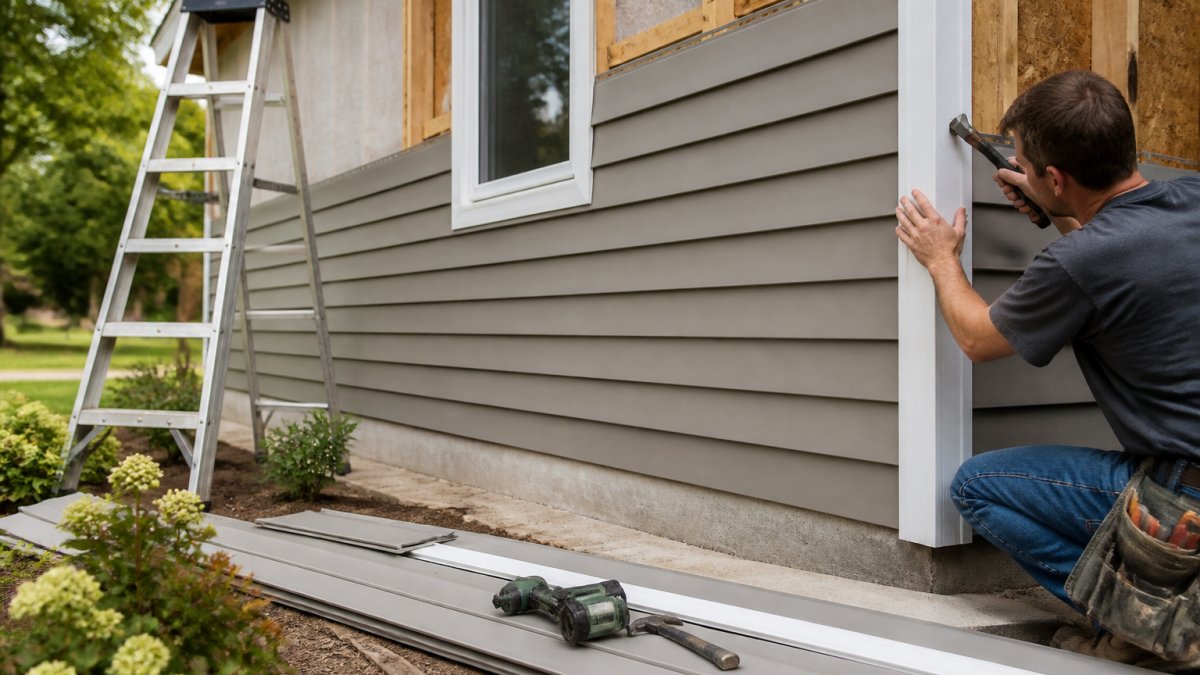
- Week 2-3: Panel installation, trim, and caulking
- Final days: Cleanup, punch-list, and walkthrough
Weather is the wild card. Rain and wind stop exterior work, and no honest crew can schedule around a Kentucky spring. Build a buffer into your expectations.
Siding Contractor Warranties: What to Read Before You Sign
A siding warranty has two parts, and homeowners routinely confuse them. The manufacturer covers the material. The contractor covers the installation. Both matter, and both need to be in writing before you sign.
Read these clauses closely:
- Material coverage length: Some panels carry decades-long coverage, but prorated terms shrink the payout over time.
- Labor and workmanship: This is the contractor's promise, and it is the one that fails first if the company vanishes.
- Transferability: Can the warranty pass to a new owner if you sell?
- Exclusions: Improper installation often voids the manufacturer's coverage, which is why the contractor's warranty matters.
- Claim process: Who do you call, and how fast must you report a defect?
The GAF residential warranty resources explain how manufacturer coverage typically works for roofing and exterior products. The same logic applies to siding: installation errors can void material coverage, so the contractor's workmanship promise is your real protection.
How to Compare Bids From Local Siding Contractors in Kentucky
Comparing bids from local siding contractors in Kentucky means comparing scope, not just price. The cheapest number often hides missing line items that surface as change orders. Line up every bid against the same checklist and the real differences become obvious.
Use this comparison framework:
| What to Compare | Why It Matters | Red Flag |
|---|---|---|
| Itemized scope | Reveals what is excluded | Lump sum only |
| Material brand and thickness | Affects durability and warranty | Unnamed materials |
| Labor and cleanup fees | Prevents surprise charges | Fees added later |
| Warranty terms | Protects you after the crew leaves | Verbal promises only |
| Payment schedule | Controls your risk | Large upfront deposit |
| Local references | Confirms follow-through | No local addresses |
If a bid comes in dramatically lower, ask what was left out. Usually it is underlayment, trim, or disposal. Those gaps get filled with change orders once the crew is on your roof line.
This is where hiring local siding contractors in Kentucky pays off. A local firm can walk you through the differences in person, show you material samples, and stand behind the work when a panel shifts two winters later. Fraley's Home Improvement has served western Kentucky and the tri-state area since 1971, and our free, no-pressure estimates are built around exactly this kind of side-by-side comparison.
Conclusion
The hardest part of a siding project is not picking a color. It is trusting the crew that shows up. Too many homeowners sign with the lowest bid and spend the next five years chasing a company that will not return a call.
We built Fraley's Home Improvement around the opposite approach: honest work, fair pricing, and transparent communication from the first call to the final inspection. Our team brings over 55 years of experience, GAF-certified craftsmanship, and a family-operated, word-of-mouth reputation to every project. Get a free estimate and see the difference a local contractor makes.
Frequently Asked Questions
How do I find a reliable siding contractor?
Start with contractors who can show a physical local address, a state contractor license where required, and proof of general liability and workers' compensation insurance. Ask for three recent references in your county and check reviews on Google and the BBB. A contractor who offers a free, no-pressure estimate and puts the scope in writing is a better sign than one who quotes a number on the spot. Local siding contractors in Kentucky who have worked the same counties for decades tend to have reputations they protect.
What should a siding installation contract include?
A solid contract names the siding brand, product line, and color; lists square footage and trim; states the removal and disposal plan; and spells out the payment schedule, start date, and completion window. It should also name who pulls permits, who handles warranty registration, and what happens if weather delays the job. Ask for the insurance certificate and lien waiver language in writing. Anything promised verbally should be added to the contract before you sign.
How long does siding installation usually take?
Most single-family homes take three to seven working days once materials are on site, depending on square footage, stories, and how much trim and soffit work is included. Ordering and delivery can add two to four weeks, and rain delays are common in western Kentucky. A realistic siding installation timeline should be written into the contract with a start date and a completion window, not just a rough estimate.
What warranties should I look for when hiring a siding contractor?
You want two warranties: a manufacturer warranty on the siding itself and a workmanship warranty from the installer. Manufacturer coverage on vinyl and fiber cement often runs 20 to 50 years, but it usually covers materials only and can be voided by improper installation. A workmanship warranty of at least five years is a reasonable benchmark. Get both in writing, confirm they are transferable if you sell the home, and check whether registration is required.
How much does siding installation cost?
Pricing depends on the siding material, square footage, number of stories, trim and soffit work, and whether old siding must be removed and disposed of. Vinyl typically costs less than fiber cement or engineered wood, and insulation upgrades add to the total. Because every home is different, ask for a written, itemized estimate rather than a per-square-foot guess. Fraley's Home Improvement offers free, no-pressure estimates so you can see the scope and cost before committing.
Choosing siding is a long-term decision, and the contractor you hire matters as much as the material. Fraley's Home Improvement offers free, no-pressure assessments, GAF-certified workmanship, and a family-operated team that has served western Kentucky since 1971. Get started with Fraley's Home Improvement and protect your home with siding installed by a crew that will still be here when you need them.