 listicle
Why Choose Family Operated Contractors: 2026 Guide
Table of Contents
- Why Family Operated Contractors Earn Homeowner Trust
- Family-Owned vs. National Contractors: A Practical Comparison
- Personalized Service, Direct Communication, and Owner Involvement
- How to Choose a Reliable Contractor: A Step-by-Step Checklist
- Questions to Ask a Home Improvement Contractor Before You Sign
- Contractor Red Flags and the Risks of Family-Operated Businesses
- Contract Terms, Payment Schedules, and Change Orders
- Why Choose Family Operated Contractors for Long-Term Value
- Frequently Asked Questions
Last Updated: October 16, 2026
Why Family Operated Contractors Earn Homeowner Trust
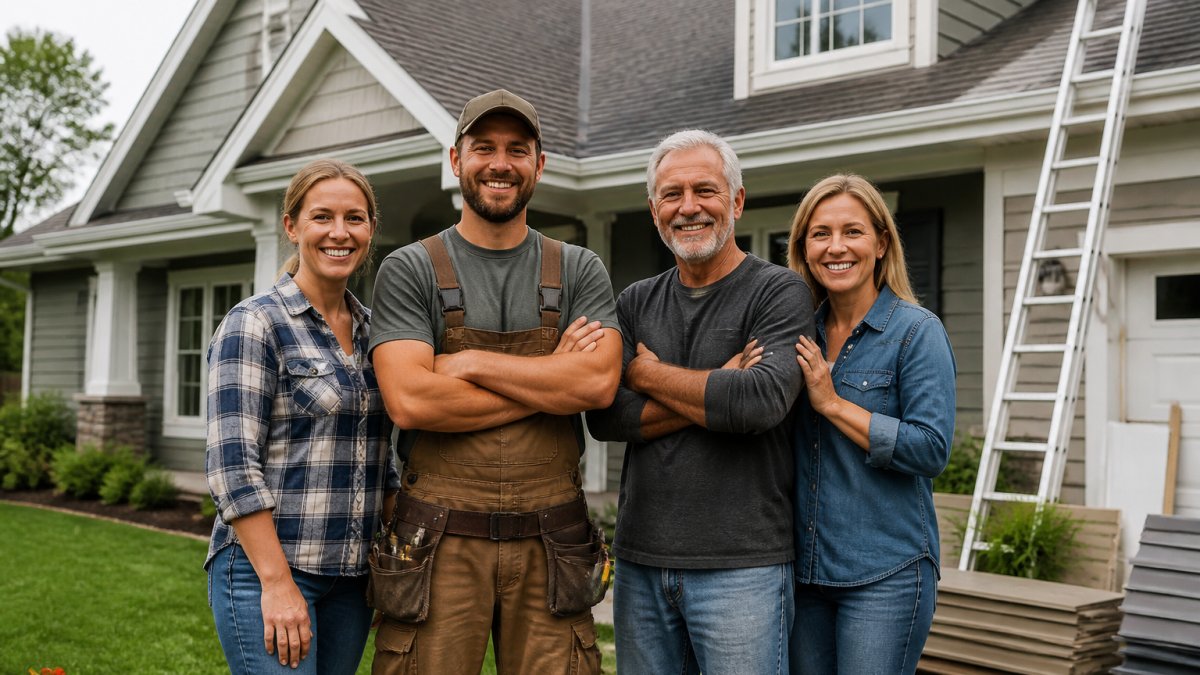
Family operated contractors are construction and home improvement businesses run by relatives who live and work in the communities they serve.
At Fraley's Home Improvement, we've watched that play out since 1971: a family-run contractor can't disappear after a bad roof job, because the homeowner will see them at the grocery store next week.
Trust in this industry is built on three things: showing up, finishing the work, and standing behind it. The Better Business Bureau's guidance on hiring contractors makes the same point from the consumer side: local accountability and verifiable references are the strongest signals a homeowner has.
Family-Owned vs. National Contractors: A Practical Comparison
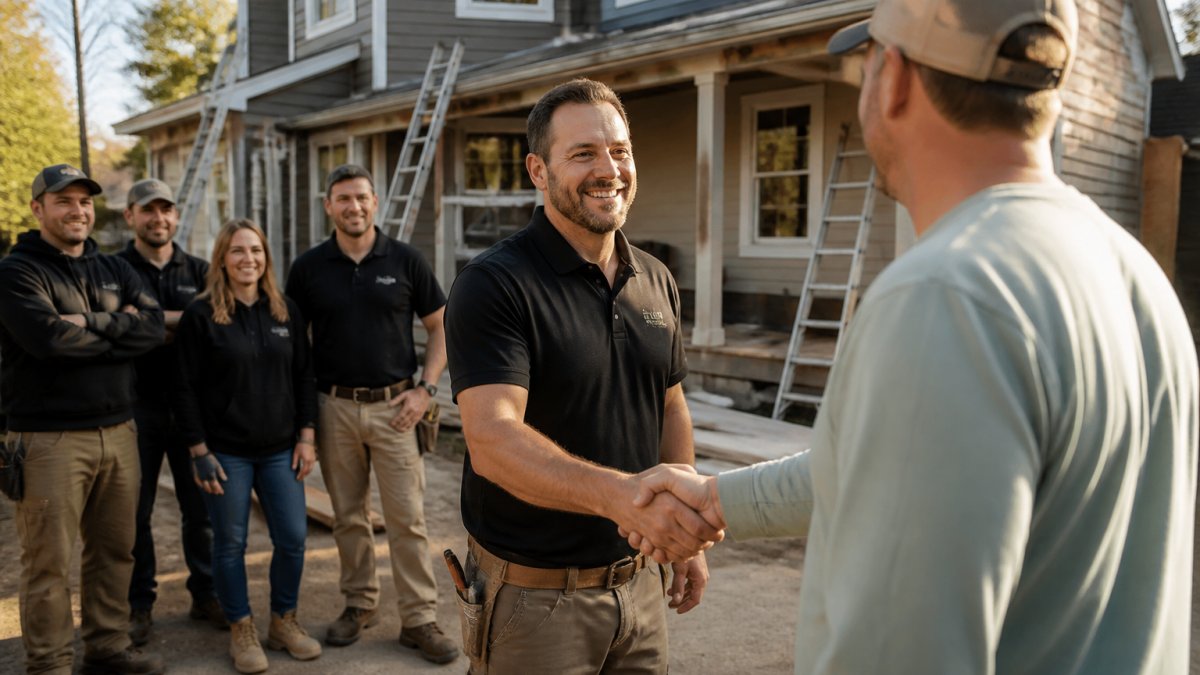
Neither option wins every category. Family-owned businesses win on relationships, accountability, and local knowledge; national companies win on scale, marketing reach, and standardized processes. The right choice depends on measurable criteria, not slogans.
Compare on Criteria, Not Adjectives
"Personalized service" and "peace of mind" mean nothing until you attach a number to them. Score both bids against the same list:
| Criterion | What to Ask | What a Family Operation Typically Shows | What a National Firm Typically Shows |
|---|---|---|---|
| Response time | "How fast do you return calls during a project?" | Same-day to next-day, owner answers | Call center or assigned rep, may route |
| Decision-maker access | "Who can approve a change on site?" | Owner or family member on the crew | Regional manager or approval chain |
| Project size limits | "What's the largest job you'll take?" | Capped by crew size and schedule | Higher ceiling, more concurrent jobs |
| Warranty handling | "Who honors the warranty in year five?" | Often the same owner who sold it | May depend on franchise or dealer status |
| Crew consistency | "Will the same people be here daily?" | Usually yes, small core crew | Frequently rotating subcontractors |
| Financing | "Do you offer payment plans?" | Sometimes limited or none | Often in-house or partnered lenders |
| Scheduling flexibility | "Can you start earlier if weather opens up?" | Often yes, fewer jobs in queue | Bound by regional scheduling |
Where Family Operations Win
- Owner involvement: The person who quoted your job is often on site, so decisions get made without a chain of approvals.
- Direct communication: You call one number and reach someone who knows your project by address, not ticket number.
- Local knowledge: They know regional weather, permit office quirks, and which suppliers deliver on time.
Where National Companies Have an Edge
- Volume pricing: Large firms negotiate lower material costs, though savings don't always reach your invoice.
- Marketing and financing: National brands often offer in-house financing and promotional pricing.
- Standardized crews: Documented processes repeated across markets can help with consistency.
The Trade-Offs That Actually Matter
A national company may offer a slicker sales process, but you're often dealing with a subcontractor you've never met. A family operation may have fewer financing options, but you know who's accountable. Neither is automatically safer, the deciding factor is whether the contractor can prove licensing, insurance, and a track record.
When Each Model Fits Best
- Choose a family operation when: the job is a defined scope (roof, siding, windows, deck), you want one point of contact, and you value a relationship you can call back in five years.
- Choose a national firm when: the project is unusually large, you need financing built into the bid, or you want a corporate warranty program with a national footprint.
- Consider either when: you've verified licensing, insurance, references, and a written contract. Those checks matter more than company size.
Personalized Service, Direct Communication, and Owner Involvement
Personalized service means the person quoting your project is the same person you call when something needs fixing, basic, but increasingly rare.
When a family-owned business takes on your roof or siding, the owner has skin in the game, managing a handful of jobs they can oversee, not forty crews across three states.
Direct communication is the other half. A family-run contractor gives you a direct line and answers it, no call center voicemails.
How to Choose a Reliable Contractor: A Step-by-Step Checklist
Choosing a reliable contractor comes down to verification: proof the business is legitimate, insured, and accountable.
Verify Licenses, Insurance, and Certifications
- Confirm the contractor holds a current state or local license for the work
- Request a certificate of insurance for general liability and workers' compensation
- Call the insurer directly to confirm the policy is active
The Federal Trade Commission's consumer advice on home improvement recommends getting everything in writing and never paying in full upfront. That's sound guidance regardless of who you hire.
Check Local Reputation and Word-of-Mouth Referrals
- Ask for three recent references from jobs similar to yours
- Call them and ask about timelines, surprises, and cleanup
- Check review platforms for patterns, not single complaints
A contractor with strong word-of-mouth referrals won't hesitate to hand over references. Reluctance is a signal.
Questions to Ask a Home Improvement Contractor Before You Sign
The right questions separate a confident hire from a gamble.
- How long have you operated under this business name? Longevity suggests stability.
- Who will be on site each day? You want names, not "a crew."
- What's the estimated timeline, and what could delay it? Material availability and weather are common factors.
- How do you handle change orders? Get the process in writing.
- What does your warranty cover, and for how long? Ask for it in writing.
- How is payment structured? Progress payments tied to milestones are standard.
- Can you provide proof of insurance today? Not next week.
- What happens if I'm unhappy with the work? A clear process beats a vague promise.
Contractor Red Flags and the Risks of Family-Operated Businesses
Family-operated businesses aren't automatically better. A family name is not a substitute for verification.
Red flags to watch for in any contractor:
- Pressure to sign today for a "today-only" discount
- Requests for full payment upfront or large cash payments
- No physical business address or verifiable license number
The real limitations of family operations:
- Capacity limits: A small team can only take on so many jobs at once, which may push your start date.
- Fewer financing options: Some family businesses don't offer in-house payment plans.
- Succession risk: If the owner retires or gets sick, project continuity can suffer.
None are dealbreakers, just trade-offs. A family-run contractor with strong references and proper licensing usually beats a national chain with a slick pitch and an unknown crew.
Contract Terms, Payment Schedules, and Change Orders
A written contract protects both sides. Before signing, make sure it covers scope of work, materials, timeline, payment schedule, and warranty.
What a solid contract includes:
| Contract Element | What to Look For | Why It Matters |
|---|---|---|
| Scope of work | Specific materials, brands, and quantities | Prevents substitutions and disputes |
| Payment schedule | Tied to milestones, not calendar dates | Protects you if work stalls |
| Change orders | Written approval required before extra work | Stops surprise charges |
| Timeline | Start date, completion estimate, delay terms | Sets clear expectations |
| Warranty | Coverage length and what's included | Defines your recourse |
| Cleanup and permits | Who handles disposal and paperwork | Avoids hidden responsibilities |
Never pay in full before work begins. A common structure ties payments to completed phases: a deposit for materials, payments as milestones are met, and a final payment after inspection. Change orders should be signed in writing before extra work starts.
Why Choose Family Operated Contractors for Long-Term Value
Long-term value isn't just the invoice. It's what happens two years later, when a flashing leaks, a window fogs, or you want to add on to the same exterior. That's where the family-operated model has a structural advantage: continuity of accountability.
The Mechanism Behind Long-Term Value
A family-run contractor planning to stay in business another generation has every reason to honor their warranty and fix problems quickly. That's not sentiment, it's incentive. Their future revenue depends on referrals from the same neighborhoods, so a warranty callback isn't a cost center; it's a reputation deposit.
That incentive shows up in three concrete places:
- Warranty follow-through. When you call about a leak in year three, you often reach the same owner who walked your roof, no franchise hotline, no dealer-of-record dispute.
- Institutional memory. A family shop keeps records across decades: which supplier's shingles failed in 2019, which inspector flagged a detail, how your house is framed. That knowledge shortens the next repair.
- Repeat-project pricing. Returning homeowners often get quoted differently than first-time customers, because the contractor already knows the property, access, and scope.
What to Verify Before You Bank on Long-Term Value
"We stand behind our work" is easy to say. Here's how to test it:
- Ask how long the current owner has held the license, not just how long the business name has existed
- Request the warranty document in writing and read what's excluded, not just what's covered
- Ask who honors the warranty if the owner retires or sells, get the answer in the contract
A family business with a working succession plan has a future, and a future is what makes a warranty worth anything.
The Succession Question, Answered Honestly
Succession risk is real: if a sole owner retires, gets sick, or passes away without a plan, project continuity and warranty coverage can get complicated. Ask directly:
"If you're unavailable mid-project, who takes over, and is that arrangement documented?"
A well-run family business will have a clear answer. A vague one is a signal to look closer at the contract's assignment and warranty-transfer language.
The Practical Case
When you need a follow-up repair or a second project, you're calling someone who already knows your home, its pitch, problem areas, and quirks. That continuity is hard to replicate with a company that rotates crews. It's the practical case for family operated contractors: their future depends on your satisfaction, and their records make the next job faster and often cheaper.
At Fraley's Home Improvement, we've built 55 years of work on exactly that principle. As a family-operated, GAF-certified team, we offer free, no-pressure estimates and stand behind our work because our name is on it. We've earned a 4.9 rating across 91+ Google reviews the same way any family business does: one satisfied neighbor at a time.
Frequently Asked Questions
What are red flags when hiring a contractor?
Watch for demands for large upfront cash payments, no written contract, no physical address, high-pressure sales tactics, and unwillingness to provide references or proof of insurance. A contractor who cannot show a license or certificate of insurance is a major risk. Also be wary if they refuse to put change orders in writing or ask you to pull permits in your own name. Trust your instincts: if something feels off, get another estimate.
Are family-owned contractors more accountable?
In many cases, yes. When the owner lives in the community and relies on word-of-mouth referrals, their reputation is on the line with every job. That personal stake often means the owner is directly involved in project management, quality control, and follow-through. However, accountability still depends on the individual business. Always verify licenses, insurance, and references, and ask who will be on site daily. A family name alone is not a substitute for due diligence.
How can I verify a contractor's license and insurance?
Ask for their license number and verify it with your state or local licensing board. For insurance, request a certificate of insurance showing general liability and workers' compensation coverage, then call the insurer to confirm the policy is active. In Kentucky, roofing and remodeling contractors may not be licensed statewide, so local permits and inspections become even more important. Never accept a photocopy without confirming it directly with the insurance company.
How do family-owned contractors compare with national remodeling companies?
Family-owned contractors typically offer direct communication with the owner, faster decision-making, and deep local knowledge of suppliers and weather patterns. National companies may have larger crews and standardized processes, but you often deal with a salesperson rather than the owner. For exterior projects like roofing or siding, local family operations can often respond quicker to storm damage and provide more flexible scheduling. The right choice depends on your project scope, timeline, and budget.
The hardest part of any home improvement project is finding someone you can trust to show up, finish the work, and stand behind it. That's the standard we hold ourselves to at Fraley's Home Improvement, with GAF-certified roofing, transparent pricing, and free no-pressure estimates from a family team that's been at it since 1971. Get started with Fraley's Home Improvement and protect your home with work you won't have to worry about.