 blog
blog
Best Siding for Energy Efficiency: 2026 Guide
Table of Contents
- Why Siding Choice Affects Energy Bills More Than You Think
- Best Siding for Insulation: Material Comparison
- Insulated Vinyl Siding: How Foam-Backed Panels Work
- Siding R-Value Explained: What the Numbers Actually Mean
- The Real Cost of Insulated Siding and What Drives It
- Climate, Moisture, and Long-Term Durability
- What to Ignore When Comparing Energy-Efficient Siding
- Conclusion
- Frequently Asked Questions
Last Updated: October 14, 2026
Why Siding Choice Affects Energy Bills More Than You Think
The best siding for energy efficiency is not simply the thickest panel on the shelf. It is the material, the insulation behind it, and the air sealing around it working as one system. At Fraley's Home Improvement, we have watched homeowners in western Kentucky replace siding expecting lower bills, only to see little change because the wall itself was never addressed.
Heat does not politely stay outside in summer or inside in winter. It moves through every gap, stud, and seam in your walls.
How Heat Moves Through Walls
Heat transfers through walls in three ways: conduction through solid materials, convection through air leaks, and radiation across open spaces. Conduction is the slow, steady loss through the wall assembly itself. Convection is the fast loss through cracks around outlets, windows, and sill plates. Most homeowners focus only on the panel and ignore the air movement behind it.
The Whole-Wall Performance Gap
Here is where most guides get it wrong. They rank siding materials by R-value alone and call it a day. The Department of Energy guide to whole-wall insulation explains that a wall's true thermal performance depends on every layer, not just the cladding.
A high-R panel over an unsealed, uninsulated cavity still leaks air. That gap is the difference between a real energy upgrade and a cosmetic one.
Best Siding for Insulation: Material Comparison
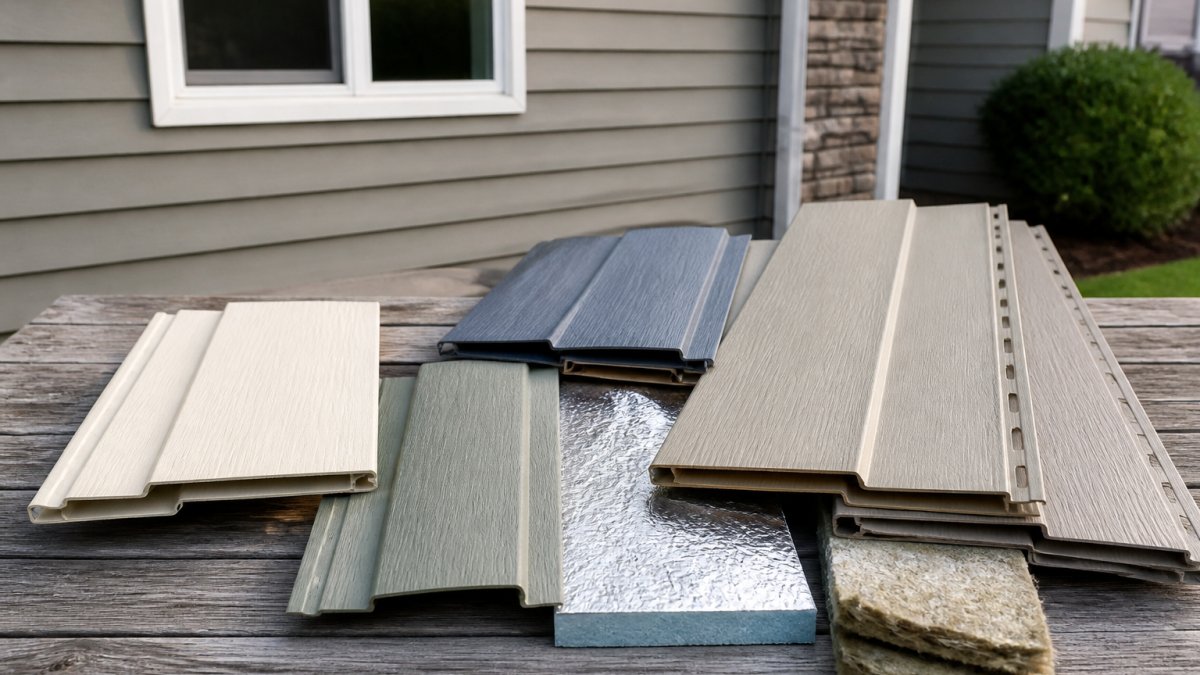
The best siding for insulation depends on your climate, budget, and how long you plan to stay. Each material handles thermal resistance, moisture, and upkeep differently.
| Material | Thermal Performance | Moisture Handling | Maintenance | Best For |
|---|---|---|---|---|
| Fiber cement | Moderate; needs backer insulation | Good when sealed and painted | Repaint every 7-10 years | Hail-prone, humid areas |
| Composite/engineered wood | Moderate to good | Varies by core; watch seams | Periodic sealing | Mixed climates, texture lovers |
| Stucco | Low unless foam-backed | Good if detailed correctly | Occasional patching | Dry, stable climates |
| Steel | Low; relies on backing | Excellent, rust-resistant coating | Minimal | Storm and fire-prone areas |
| Insulated vinyl | High with foam backing | Good with proper flashing | Soap and water | Most existing homes |
Fiber Cement Siding
Fiber cement resists rot, hail, and pests, which matters in a region that sees severe storms. Its thermal resistance on its own is modest, so the R-value comes from what you install behind it. Pair it with rigid foam sheathing and it performs well.
Composite and Engineered Wood Siding
Composite siding blends wood fiber with resins, offering the look of wood with less upkeep. Engineered wood siding performs similarly. Both depend heavily on correct installation and sealing, because moisture that gets behind the panel needs a way out.
Stucco and Steel Siding
Stucco is durable and low-maintenance in the right climate, but it offers little insulation unless applied over foam. Steel siding resists damage and needs almost no upkeep, yet it conducts heat, so it relies entirely on the insulation behind it.
Insulated Vinyl Siding: How Foam-Backed Panels Work
Insulated vinyl siding is standard vinyl with a contoured foam layer bonded to the back. That foam fills the hollow space behind the panel and adds a continuous layer of thermal resistance.
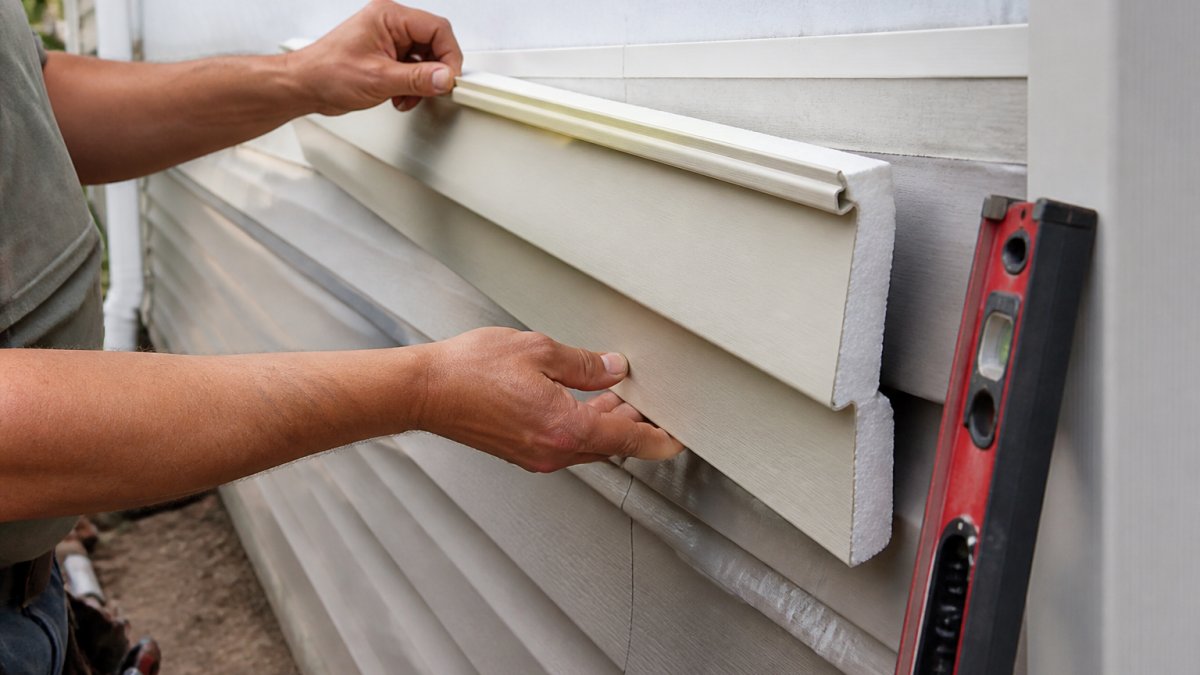
Foam-backed panels also resist denting better than hollow vinyl, so they hold up to hail and debris. The key is installation. Panels must lock tightly and be flashed correctly, or the foam's benefit is wasted on a leaky wall.
Siding R-Value Explained: What the Numbers Actually Mean
Siding R-value measures thermal resistance, or how well a material slows heat transfer. A higher number means better resistance. Vinyl alone sits near R-0.6, while foam-backed panels can add several points on top.
But the number on the box describes the product, not your wall. The DOE on exterior insulation and R-value notes that the assembly's total R-value, including sheathing and cavity insulation, is what governs performance.
Rigid Foam Sheathing and Exterior Insulation
Rigid foam sheathing is a board of foam insulation installed between the framing and the siding. It breaks the thermal bridge that studs create and adds continuous exterior insulation. This is one of the most effective upgrades you can make, and it is invisible once the siding is up.
The Real Cost of Insulated Siding and What Drives It
Cost questions about insulated siding rarely get an honest answer, because the honest answer depends on the wall, not the panel. Below is how to think about the numbers without relying on a universal per-square figure that will not match your project.
What Actually Drives the Price
- Material. Foam-backed insulated vinyl carries a premium over standard vinyl because of the bonded foam layer. Fiber cement and steel sit in different price bands again, and composite or engineered wood varies by core.
- Square footage and wall complexity. Gables, dormers, corners, and multiple stories add labor faster than they add material.
- Removal and disposal of old siding. Tear-off, haul-away, and any rot repair behind the old panel are separate line items.
A Transparent Way to Estimate Savings
No honest contractor can promise a specific monthly dollar figure without an energy audit, because savings depend on baseline conditions, climate, home size, and local energy prices. A defensible estimate works like this:
- Establish the baseline: current heating and cooling costs, wall construction, existing insulation levels, and air leakage.
- Model the change: the added R-value of the exterior insulation plus the air-sealing improvements, applied to the wall area actually being re-sided.
- Apply local conditions: your climate zone and current utility rates, not a national average.
- Subtract the cost of the upgrade, not the whole project, since you were re-siding anyway.
Most practitioners find that the insulation and air-sealing portion of a re-siding project pays back faster than the cosmetic portion, but the range is wide. Treat any single "you will save X%" claim as a red flag.
Lifecycle Cost, Not Just Sticker Price
Compare materials over their service life, not at the register:
- Purchase and installation. Insulated vinyl and fiber cement generally cost more up front than standard vinyl.
- Maintenance. Fiber cement typically needs repainting on a multi-year cycle; steel and vinyl need mostly cleaning; composites vary by core.
- Replacement interval. A wall that manages moisture lasts longer, which lowers the annualized cost even if the panel cost more.
Rebates, Incentives, and Code Interactions
Insulation and air-sealing upgrades sometimes qualify for utility rebates or federal tax credits, and the rules change. Two practical steps:
- Check with your utility and a qualified tax professional about current programs before signing a contract, and ask whether the work must be documented with a blower-door test or an energy audit to qualify.
- Ask your contractor how the proposed assembly meets the energy code in effect for your area. Adding exterior insulation during a re-side is often the cheapest moment to bring a wall up to current code, because the labor is already there.
Pricing varies by project, so we recommend a written estimate rather than a per-square figure pulled from a website. At Fraley's Home Improvement, we provide free, no-pressure estimates so you can see the full scope before committing.
Climate, Moisture, and Long-Term Durability
Most siding roundups treat climate as a footnote. In practice, the right wall assembly for a heating-dominated climate is not the right one for a cooling-dominated, humid, or severe-weather climate, and getting this wrong can turn an "energy upgrade" into a moisture problem.
Match the Assembly to the Climate
- Heating-dominated climates (long cold winters): The priority is continuous exterior insulation that keeps the sheathing warm enough to stay above the dew point, plus a well-sealed interior air barrier. Rigid foam sheathing over the framing, with taped seams, is the workhorse here. Insulated vinyl or fiber cement over that foam performs well because the foam, not the panel, does the thermal work.
- Cooling-dominated climates (long hot summers): The priority shifts to reflecting solar gain and controlling inward vapor drive. Light-colored or reflective panels, a ventilated rainscreen gap, and an exterior drainage plane matter more than stacking R-value. Steel and light fiber cement handle radiant heat well when paired with a vented cavity.
- Humid climates: Moisture management outranks thermal performance. The wall needs a drainage plane, flashing at every penetration, and a path for vapor to dry outward. Fiber cement and steel tolerate wetting better than wood-based composites, but any panel fails if water cannot escape.
The Moisture Mechanisms That Decide Whether Efficiency Lasts
A wall that saves energy but traps water will cost more over its life than a modest wall that dries. Four mechanisms control this:
- Drainage plane. A weather-resistive barrier (housewrap or a fluid-applied membrane) behind the siding lets liquid water that gets past the panel drain down and out instead of soaking into sheathing.
- Vapor control. In cold climates, the vapor retarder generally belongs on the warm-in-winter side so interior moisture does not condense inside the wall. In hot-humid climates, the logic flips, and exterior vapor-permeable assemblies are usually preferred. Adding exterior foam without checking vapor placement is a common mistake.
- Condensation risk. Every layer you add changes the dew point location inside the wall. Rigid foam sheathing can push the dew point outward and reduce condensation on the sheathing, but only if the foam thickness and interior vapor control are coordinated.
- Ventilation and drying. A ventilated rainscreen gap behind the siding, plus soffit and ridge venting in the roof assembly, gives the wall a way to dry. Sealing a wall too tightly without a drying path is how "efficient" walls rot.
A durable wall regulates indoor temperatures, resists damage, and needs less upkeep over its life. That combination, not the panel's R-value alone, is what lowers operating costs year after year.
What to Ignore When Comparing Energy-Efficient Siding
Ignore any claim that a single material is universally best. Siding performance depends on your wall assembly, your climate, and the quality of installation.
- Marketing R-values that ignore the whole wall
- Promises of specific monthly savings without an energy audit
- Lowest-bid quotes that omit air sealing and flashing
The EPA guidance on home energy efficiency points to the building envelope as the foundation of efficiency. Siding is part of that envelope, not a standalone fix.
Conclusion
Choosing siding is really a decision about your whole wall, and getting it right takes more than comparing panels. Fraley's Home Improvement has spent over 55 years helping homeowners protect their homes with honest work and fair pricing. We back our work with GAF Factory Certification and a BBB A+ rating, and our 4.9-star Google reviews reflect how we treat every project.
Frequently Asked Questions
Which siding material provides the best insulation?
Insulated vinyl siding with foam backing typically delivers the highest R-value per panel, often between R-2 and R-5 depending on foam thickness. Fiber cement and composite siding have lower inherent insulation but perform well when paired with rigid foam sheathing behind them. For maximum thermal resistance, combine any siding material with continuous exterior insulation. The best choice depends on your climate, wall assembly, and budget, so ask a contractor to assess your whole-wall performance before deciding.
Is insulated vinyl siding worth the extra cost?
Insulated vinyl siding costs more than standard vinyl, but the foam backing adds R-value, reduces air leakage, and can lower heating and cooling costs over time. It also dampens noise and resists denting better than hollow panels. Whether it pays off depends on your current insulation, climate, and how long you plan to stay in the home. Request a no-pressure estimate that breaks down material and labor separately so you can compare the numbers directly.
Does new siding make a house more energy efficient?
New siding improves energy efficiency when it includes insulation, proper air sealing, and moisture management. Replacing old, damaged siding with insulated panels or adding rigid foam sheathing reduces heat transfer and air leakage. However, siding alone will not fix an under-insulated wall cavity. For the best results, address air sealing and wall insulation at the same time. A contractor can identify where your home loses the most energy before recommending a siding upgrade.
What should I look for when comparing energy-efficient siding?
Focus on R-value, material durability, moisture resistance, and installation quality. Check whether the siding includes foam backing or requires separate rigid foam sheathing. Ask about air sealing details at seams, windows, and penetrations. Review warranty terms for both materials and labor. Also factor in climate suitability: what works in a humid climate may not perform the same in freeze-thaw cycles. Finally, get itemized quotes so you can compare the cost of insulated siding across materials fairly.