 Listicle
7 Best Siding Materials for Kentucky Weather
Last Updated: November 19, 2026
Quick Summary
The best siding materials for Kentucky weather are fiber cement, engineered wood, and vinyl. Fiber cement is our top pick for most homes because it resists moisture, rot, and pests and holds up to hail better than vinyl, while engineered wood offers the best wood-look alternative and vinyl wins on budget.
- Kentucky's humid summers, spring storms, and freeze-thaw cycles crack siding that isn't built for this climate.
- Fiber cement costs $7 to $12 per square foot installed and lasts 30 to 50 years.
- Vinyl is the budget champion at $3 to $7 per square foot, but hail can crack or puncture it.
- Brick and stone veneer offer the best impact resistance, so most homeowners use them as accents.
- A low bid that skips house wrap, flashing, or proper fastening costs more over the life of the home.
Table of Contents
- Kentucky Climate Factors That Decide Your Siding
- Quick Comparison: Best Siding Materials for Kentucky Weather
- Fiber Cement Siding Pros and Cons for Humid, Storm-Prone Homes
- Vinyl Siding for Humid Climates: Affordable Protection With Limits
- Engineered Wood and Wood Siding: Wood Looks Without the Rot
- Brick, Stone Veneer, Stucco, and Metal Siding Options
- Siding Replacement Cost and Lifetime Value
- Best Siding for Energy Efficiency and Insulation
- Frequently Asked Questions
Kentucky Climate Factors That Decide Your Siding
The best siding materials for Kentucky weather have to survive four seasons of punishment: humid summers, driving spring storms, and freeze-thaw cycles that crack weak products. At Fraley's Home Improvement, we've served homeowners across western Kentucky for over 55 years, and the failures we see most often trace back to one thing, a material that wasn't built for this climate.
Kentucky sits in a transition zone. Summers push humidity high enough to feed mold on any surface that traps moisture. Winters swing above and below freezing, so water works into seams, expands, and pries them open. Spring and summer bring hail and straight-line wind. Siding materials that perform well in Arizona often fail here within a decade.
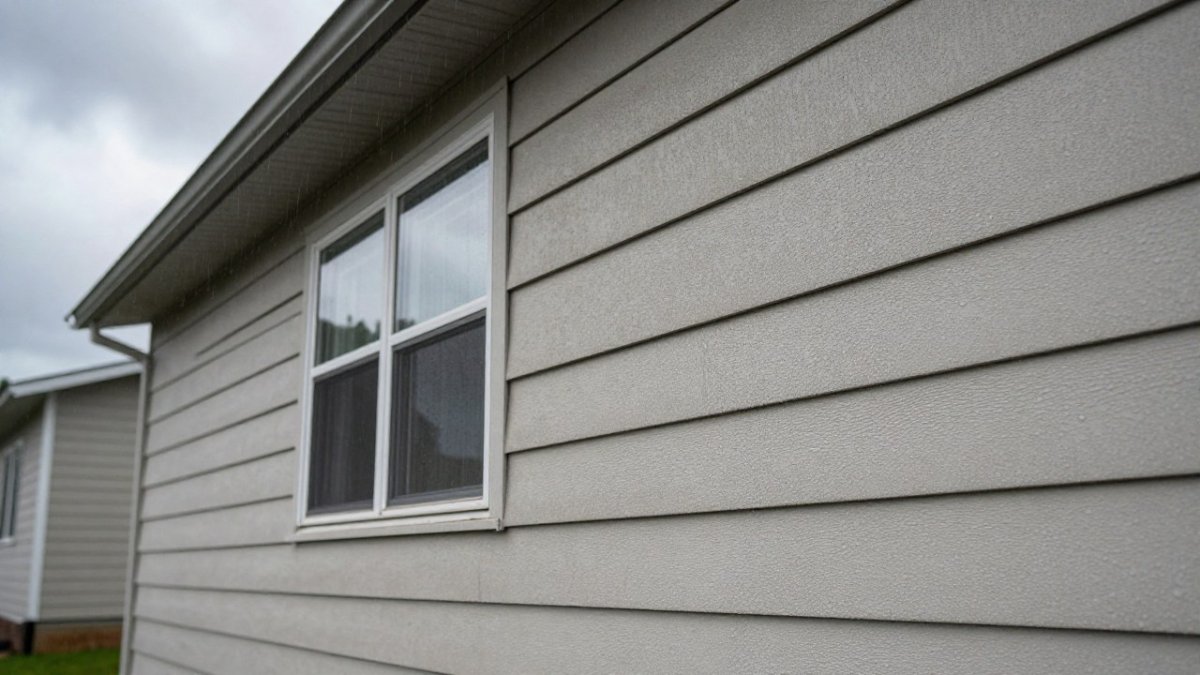
Three forces drive every recommendation in this guide:
- Moisture resistance. Humidity and rainfall punish anything that absorbs water.
- Freeze-thaw durability. Materials that crack under expansion are out.
- Impact and wind resistance. Hail is a real annual threat, not a rare event.
Below, we rank seven siding materials on how well they handle all three, plus what each one costs you over its lifespan.
Quick Comparison: Best Siding Materials for Kentucky Weather
Here's the short version. Fiber cement is our top pick for most homes, engineered wood is the best wood-look alternative, and vinyl wins on budget.
| Material | Moisture Resistance | Hail & Impact | Maintenance | Best For |
|---|---|---|---|---|
| Fiber cement | Excellent | Good | Low | Most homes, long-term value |
| Engineered wood | Very good | Very good | Low | Wood look on a budget |
| Vinyl | Good | Fair | Very low | Tight budgets |
| Brick and stone veneer | Excellent | Excellent | Very low | Accents and curb appeal |
| Stucco | Good | Fair | Low | Seamless, textured finishes |
| Metal | Excellent | Excellent | Very low | Modern styles, storm exposure |
| Natural wood | Fair | Fair | High | Historic and rustic homes |
The table tells you what to expect. The sections below explain why each material earns its spot.
Fiber Cement Siding Pros and Cons for Humid, Storm-Prone Homes
Fiber cement siding is a composite of cement, sand, and cellulose fiber, and it's the closest thing to a set-and-forget exterior for Kentucky homes. It doesn't rot, it doesn't feed termites, and it holds paint far longer than wood.
The pros are straightforward:
- Resists moisture, rot, and pests
- Non-combustible, so it adds fire resistance
- Holds up to hail better than vinyl
- Low maintenance once painted
Where Fiber Cement Wins and Where It Falls Short
Fiber cement wins on longevity and stability. It won't warp in summer heat or crack apart in a hard freeze, and it holds paint for years rather than seasons.
Where it falls short is cost and installation. Fiber cement costs more than vinyl, and it's heavy, so it demands experienced hands. A common mistake is hiring the cheapest crew available; poor flashing and caulking around fiber cement invites water infiltration that ruins the whole point of the material. Because installation quality matters as much as the material itself, vinyl siding installation also depends on careful attention to flashing and caulking.
Vinyl Siding for Humid Climates: Affordable Protection With Limits
Vinyl siding for humid climates is the budget champion, and it handles moisture well because the material itself can't absorb water or rot.
Moisture, Mold, and Hail: What Vinyl Handles Well
Vinyl shrugs off humidity, resists pests, and cleans up with a garden hose. Mold grows on dirt film, not on the vinyl itself, so routine cleaning keeps it looking new.
Hail is the weak point. Vinyl can crack or puncture in a severe impact event, and extreme cold makes it more brittle. If your home sits in a hail-prone pocket of the region, we'd steer you toward fiber cement or engineered wood. For a deeper comparison of how materials stack up in wet climates, see our guide on the best siding for humid climates.
Engineered Wood and Wood Siding: Wood Looks Without the Rot
Engineered wood siding gives you the warmth of real wood with factory treatment that fights what nature throws at it.
You get wood texture and profiles without the repainting treadmill of natural cedar. It's also lighter than fiber cement, which eases installation.
Natural wood siding remains the beauty standard for historic and rustic homes, but it's the highest-maintenance option on this list. It needs regular sealing and painting, and it's vulnerable to rot where water sits. If you love the wood look but want less upkeep, engineered wood is the smarter buy.
Brick, Stone Veneer, Stucco, and Metal Siding Options
Brick and stone veneer deliver the best curb appeal and impact resistance of any option, and they laugh at hail. Stone veneer gives you the masonry look at a lighter weight than full brick. The tradeoffs are cost and installation complexity, since these require masonry-style work. Most homeowners use them as accents rather than full wraps.
Stucco offers a seamless, fire-resistant finish with solid insulation value. It's durable, but it can crack if the foundation shifts, and cracks invite water in.
Metal siding is the storm champion. It's fire resistant, impact resistant, and lasts decades with almost no maintenance. The one knock: heavy rain gets loud. For modern-style homes or properties that take a beating from weather, metal is worth a hard look.
Siding Replacement Cost and Lifetime Value
Siding replacement cost depends on material, square footage, the condition of the sheathing underneath, and how much trim and flashing work the job requires.
| Material | Typical Installed Cost per Square Foot | Typical Service Life | Repainting / Recoating Cycle | Cost per Year of Service (midpoint) |
|---|---|---|---|---|
| Vinyl | $3-$7 | 20-30 years | None (cleaning only) | About $0.20 |
| Engineered wood | $5-$9 | 25-40 years | Every 8-12 years | About $0.25 |
| Fiber cement | $7-$12 | 30-50 years | Every 10-15 years | About $0.25 |
| Natural wood (cedar, pine) | $6-$12 | 15-30 years with upkeep | Every 4-7 years | About $0.45 |
| Stucco | $8-$14 | 30-50 years | Every 10-15 years | About $0.30 |
| Brick veneer | $10-$20 | 50+ years | None | About $0.25 |
| Stone veneer | $15-$30 | 50+ years | None | About $0.40 |
| Metal | $8-$16 | 40-60 years | Every 20-30 years (paint) | About $0.25 |
Typical Installed Cost per Square Foot
Watch out: a low bid that skips house wrap, flashing, or proper fastening will cost more over the life of the home than a higher bid that includes them, because water intrusion behind the cladding is the most common cause of premature replacement in this climate.
If you're ready to price your project, request a free estimate and we'll walk your exterior with you, no pressure. You can also read more about siding installation in Henderson, KY and how our team handles the full job.
Best Siding for Energy Efficiency and Insulation
The best siding for energy efficiency is not a single material; it is a wall assembly. The cladding you see is the outer layer, but the sheathing, water-resistive barrier, flashing, and insulation behind it do most of the work keeping heat in and moisture out. Two homes with identical fiber cement siding can perform very differently depending on how that assembly was built.
Here is what actually matters, layer by layer:
- Water-resistive barrier. A house wrap or weather-resistive barrier goes over the sheathing before any siding. It sheds bulk water that gets past the cladding and lets vapor escape. Skipping it, or installing it with laps facing the wrong way, traps moisture against the framing.
- Flashing. Window and door openings, roof-to-wall intersections, and penetrations need flashing that laps over the barrier below and behind the barrier above. This is the single most common failure point in wet climates, and it is invisible after the siding goes up.
- Drainage plane and air gap. Some assemblies use a rainscreen or furring strips to create a small gap behind the cladding so water drains and the wall dries. This matters most for fiber cement, engineered wood, and wood, which can hold surface moisture.
- Expansion gaps. Vinyl and metal expand and contract with temperature swings. Fasteners must be set in slotted holes and leave room for movement, or panels buckle and crack in a hard freeze.
- Fastening. Nails or screws must hit framing, not just sheathing, and must be set at the correct depth. Overdriven fasteners crush the material and create a path for water.
- Insulation and air sealing. Continuous rigid insulation or insulated backing panels reduce thermal bridging through studs. Sealing gaps around penetrations and at the top and bottom plates stops air movement that carries moisture into the wall cavity.
Stucco and fiber cement add thermal mass and block air movement well. Vinyl and metal can be paired with insulated backing panels to boost performance. The real gains, though, come from sealing gaps and installing a continuous water-resistive barrier before the siding goes up, not from the cladding alone.
If energy performance is your priority, our guide on whether energy efficient siding installation benefits are worth it breaks down the math, and our full guide to energy-efficient siding ranks materials by insulation value.
Frequently Asked Questions
What siding material is best for Kentucky weather?
Fiber cement siding handles Kentucky's humidity, freeze-thaw cycles, and hail better than most options. It resists moisture, rot, and pests, and it holds up to impact without cracking the way vinyl can. Engineered wood is a close second for homeowners who want a wood look with less maintenance. Vinyl remains the budget pick, but it is more vulnerable to hail and extreme temperature swings. The right choice depends on your budget, how long you plan to stay, and how much maintenance you want to take on.
Is vinyl siding a good choice for Kentucky homes?
Vinyl siding for humid climates works well when it is installed correctly. It does not rot, resists pests, and needs little more than an occasional wash. The catch is impact resistance: hail can crack or puncture lower-grade vinyl, and extreme cold makes panels more brittle. If you choose vinyl in western Kentucky, look for thicker panels rated for wind and impact, and make sure the installer leaves proper expansion gaps so panels do not buckle in summer heat.
How much does it cost to replace siding on a house?
Siding replacement cost varies widely by material, square footage, and how much prep work your home needs. Removal of old siding, trim work, and repairs to sheathing can add to the total. Because pricing depends on your home's size and condition, request a free, no-pressure estimate so you get a number based on your actual exterior rather than a national average.
Does new siding improve a home's energy efficiency?
New siding can improve energy efficiency, but the insulation behind it matters more than the surface material. Fiber cement, stucco, and engineered wood add some thermal mass or insulating value, and vinyl can be paired with contoured foam backing. The biggest gains come from air sealing and adding a continuous insulation layer during installation. If your goal is the best siding for energy efficiency, ask your contractor about insulated backing and sealing around windows, doors, and penetrations at the same time.
How long does siding typically last in a humid climate?
Lifespan depends on material and upkeep. Lifespan depends on the material and how well it is maintained. In humid climates, the failure points are rarely the panels themselves. Caulking, flashing, and paint film do the protecting, so a maintenance schedule that reseals joints and touch-up paint every few years is what actually extends the life of your siding.