 How-to
Are Your Windows Making You Cold? Signs of Poor Insulation
Last Updated: November 4, 2026
Quick Summary
The clearest signs of poor window insulation are drafts you can feel around the frame, sash, and sill, heating bills that climb faster than the weather explains, and fog or frost trapped between two panes. Curtains that move with the window shut and whistling during gusts also point to air leakage.
- Most air leakage happens at the frame, sash, and sill, not through the glass itself.
- Fog or frost between panes means the seal failed and the insulating gas leaked out.
- You can test for leaks in about fifteen minutes using a smoke test, feel test, and dollar-bill test.
- Re-caulk the exterior, replace weatherstripping, and add draft stoppers before considering replacement.
- Replace the unit when fog sits between panes or the frame is warped, rotted, or will not close.
Table of Contents
- 1. Drafts and Air Leakage You Can Feel
- 2. Rising Energy Bills and a Struggling HVAC System
- 3. Window Condensation Causes and What They Reveal
- 4. How to Check Window Insulation Yourself
- 5. How to Improve Window Insulation Without Replacing Windows
- 6. The Cost to Insulate Windows and When Replacement Wins
- 7. Get a Free Estimate Before Another Winter
- Frequently Asked Questions
1. Drafts and Air Leakage You Can Feel
The clearest signs of poor window insulation start with a draft you can feel on the back of your hand. Cold air slipping past a sash or sill means outside air is getting in, and heated air is getting out. That is air infiltration, and it quietly raises your heating costs all winter.
Watch for these draft clues:
- A steady chill near closed windows on windy days
- Curtains or blinds that move with the window shut
- Cold spots you notice when you walk past
- Whistling or rattling sounds during gusts
Most of this leakage happens at the frame, sash, and sill, not through the glass itself. Worn weatherstripping and cracked caulking are common culprits. A common mistake is blaming the glass when the real gap is at the edges.
The draft is real, but the fix is often smaller than homeowners expect.
2. Rising Energy Bills and a Struggling HVAC System
A jump in your heating bill with no change in habits points to heat loss. When windows leak, your furnace or heat pump works harder to hold the temperature you set. That extra run time shows up on your statement and wears on the system.
Here is what to watch for:
- Bills climbing faster than the weather explains
- Rooms that never quite reach the thermostat setting
- A furnace that runs almost nonstop on cold nights
- Uneven warmth from room to room
This is where poor window insulation turns into an HVAC load problem. The system is fine. The envelope around it is not. If your windows are the weak link, the equipment pays for it.
3. Window Condensation Causes and What They Reveal
Window condensation causes come down to one thing: warm, moist indoor air meeting a cold surface. A little fog on the inside of a single pane is normal in winter. Fog or frost trapped between two panes is not.
That trapped moisture is the tell. It means the seal on a double-pane unit has failed, and the insulating gas between the panes has leaked out. Once that happens, the glass loses much of its insulation value, measured as its R-value or U-factor.
Signs to check for:
- Fog, haze, or frost between the panes
- Water pooling on the sill
- Streaks or mineral film inside the glass
- Moisture that never clears, even on dry days
Moisture buildup between panes cannot be wiped away. That is the difference between a housekeeping issue and a seal failure.
4. How to Check Window Insulation Yourself
You can test for leaks in about fifteen minutes with items you already own. This is how to check window insulation before you call anyone.
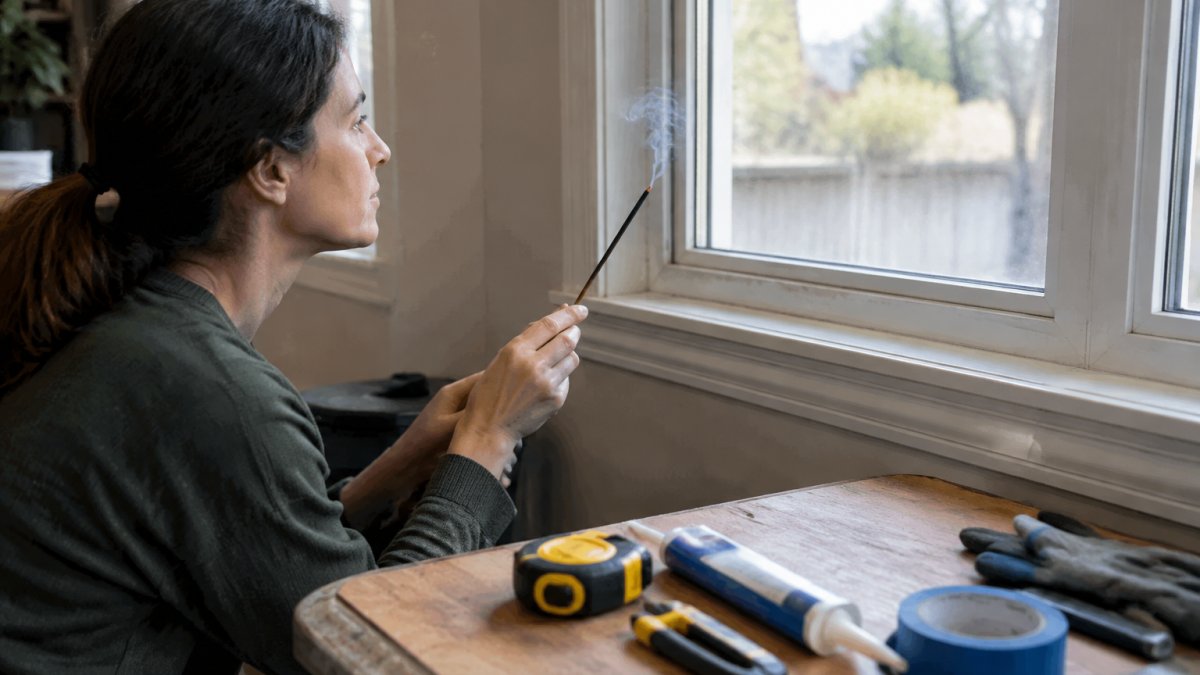
Try these checks:
- The smoke test. Hold a lit incense stick near the frame on a windy day. If the smoke wavers or pulls toward a gap, air is moving through.
- The feel test. Run your hand slowly around the sash, sill, and frame edges. A draft will show up fast.
- The dollar-bill test. Close a bill in the window and try to pull it out. If it slides free with no drag, the seal is loose.
- The visual check. Look for cracked caulking, peeling paint, warping, and worn weatherstripping.
- The condensation check. Note any fog between panes.
For a deeper read, a thermal imaging scan shows temperature gaps a hand cannot feel.
If your self-check turns up drafts or fog, a window inspection in Henderson, KY can confirm the diagnosis before you spend a dime on fixes.
5. How to Improve Window Insulation Without Replacing Windows
You can improve window insulation on sound windows with a few low-cost steps. This is how to improve window insulation when the glass is still good and only the seals have aged.
Start with the cheap fixes first:
- Re-caulk the exterior around the frame where cracks have opened
- Replace weatherstripping on the sash and sill
- Add draft stoppers at the bottom of loose windows
- Apply insulating film to single panes for a temporary boost
- Hang heavier curtains and keep them closed on cold nights
- Lock the sash so it seats tightly against the seal
These are temporary to semi-permanent fixes. They cut air infiltration and improve home comfort, but they cannot restore a failed double-pane seal. Insulating film, for example, helps for a season or two. It does not fix glass that has lost its gas fill.
Think of it this way: weatherstripping and caulking treat the edges. Nothing you apply to the outside fixes moisture trapped between panes.
6. The Cost to Insulate Windows and When Replacement Wins
The cost to insulate windows depends on what you are fixing. Weatherstripping and caulking are small jobs you can often do yourself. A full replacement is a larger project, and pricing depends on quantity, dates, and delivery. For current pricing or a quote, visit Fraley's Home Improvement's website.
So when does replacement win? Here is how we would decide:
| Situation | Better Fix | Why |
|---|---|---|
| Drafts at edges, glass clear | Re-caulk and weatherstrip | Cheap, fast, fixes air leakage |
| Fog or frost between panes | Replace the unit | Seal has failed; gas is gone |
| Warping, rot, or a sash that will not close | Replace the window | Frame damage defeats any seal |
| Single-pane glass in an older home | Replace for long-term savings | Low insulation value, high heat loss |
| One or two problem windows | Repair those units | No need to redo the whole house |
Age matters here. Windows from a few decades ago often fail at the seal first. A failed seal is not a maintenance issue. It is the end of that unit's useful life.
If replacement looks like the better path, our window replacement in Henderson, KY page walks through options and free estimates. For the energy side of the math, read are your old windows costing you money?.
7. Get a Free Estimate Before Another Winter
The signs of poor window insulation are easy to spot once you know them: drafts, climbing bills, fog between panes, and sashes that stick. The hard part is knowing whether to patch or replace. That is a judgment call, and it is one we make for free.
Fraley's Home Improvement has served homeowners for over 55 years as a family-operated business, and we are GAF Factory Certified and BBB A+ rated. We offer free, no-pressure estimates and honest work at fair pricing.
Ready to stop guessing? Get a free estimate or call (270) 826-0627. You can also visit our window installation service in Henderson, KY page to book a visit. Get started with Fraley's Home Improvement and keep the cold where it belongs: outside.
Frequently Asked Questions
Can you feel a draft through a closed window?
Yes, and it is one of the clearest signs of poor window insulation. A draft through a closed window usually means worn weatherstripping, cracked caulking around the frame, or a failed seal between the sash and the sill. Test it on a windy day by holding a lit incense stick or a thin piece of tissue near the edges. If the smoke or tissue moves, air is getting in. Sealing those gaps with fresh caulk or weatherstripping often makes a noticeable difference before you consider replacement.
Does condensation on a window mean it is poorly insulated?
It depends on where the moisture appears. Condensation on the inside surface of a single-pane window is common in cold weather and points to a weak insulation value. Moisture trapped between two panes, however, means the seal on a double-pane unit has failed and the insulating gas has escaped. That foggy or cloudy glass cannot be repaired by wiping it down. A window professional can confirm whether the glazing needs replacement or whether better ventilation and humidity control will solve the problem.
How can you tell whether a window needs repair or replacement?
Repair usually makes sense when the problem is limited to hardware, weatherstripping, caulking, or a single broken pane. Replacement is the better call when you see fogging between panes, warped frames, difficulty opening and closing the sash, or a cluster of symptoms across several windows at once. Age matters too. Windows past the 20-year mark with repeated seal failures rarely pay back further repairs.
How can I improve the insulation of my windows on a budget?
Start with the cheapest fixes. Apply fresh caulk around the exterior frame, replace worn weatherstripping, and install draft stoppers at the sill. A window insulation kit with clear shrink film adds a layer of dead air space for a modest cost and works well on single-pane windows you are not ready to replace. Heavy curtains and cellular shades also slow heat loss at night. These steps reduce air infiltration and improve comfort, though they will not restore a failed double-pane seal.