 How-to
How to Choose a Roof Replacement Contractor
Last Updated: November 2, 2026
Quick Summary
A roof replacement contractor is a licensed, insured company that removes your existing roof covering and installs a new roofing system under a written contract. Choose one by verifying the license and insurance, comparing itemized bids rather than totals, and confirming the workmanship warranty and change-order process in writing.
- Call the insurer to confirm liability and workers' compensation policies are active, since certificates can be outdated or edited.
- A bid far below the others usually omits tear-off, permits, flashing, or warranty coverage.
- The workmanship warranty covers installation errors, the most common cause of early roof failure.
- A fair change order documents the problem with photos and prices the fix in writing before work begins.
- Permits should be pulled in the contractor's name, with the permit number confirmed in writing.
Table of Contents
- Start With Licensing, Insurance, and Local Standing
- Use a Roofing Contractor Checklist to Screen Experience and Reputation
- Questions to Ask a Roofing Contractor Before You Sign
- How to Compare Roofing Estimates Without Getting Fooled by Lowball Pricing
- Review the Roof Replacement Contract Checklist and Change Order Terms
- Verify Roofing-System Details, Permits, and Project-Day Quality Control
- Get a Free, No-Pressure Roof Assessment From Fraley's Home Improvement
- Frequently Asked Questions
Start With Licensing, Insurance, and Local Standing
Learning how to choose a roof replacement contractor starts with three checks you can finish before anyone climbs a ladder: confirm the license, confirm the insurance, and confirm the company operates near you. A roof is the most expensive exterior system on a house, and the wrong crew can turn a repair into a rebuild.
A roof replacement contractor is a licensed, insured company that removes your existing roof covering and installs a new roofing system under a written contract. That definition matters.
Most homeowners skip straight to price. That is the mistake we see most often. You can get expert roof replacement in Henderson, KY with a free estimate. Price tells you nothing until you know who stands behind the work.
Verify the Contractor License and Registration
Roofing licensing varies by state and county, so ask what applies where you live, then ask the contractor to show it. Check the license number against the state or local licensing board's public lookup, and confirm the name on the license matches the name on the estimate. If a salesperson says licensing "isn't required for roofing here," verify that claim yourself before you sign anything.
Confirm Insurance and Workers' Compensation Coverage
Ask for a certificate of insurance and read it. You want to see general liability insurance and workers' compensation coverage listed. Call the insurer to confirm the policy is active, because certificates can be outdated or edited. This protects you from a lien if a supplier goes unpaid and from a lawsuit if a worker is hurt on your property.
Use a Roofing Contractor Checklist to Screen Experience and Reputation
Screening a roofer takes about an hour of focused work and saves months of regret.
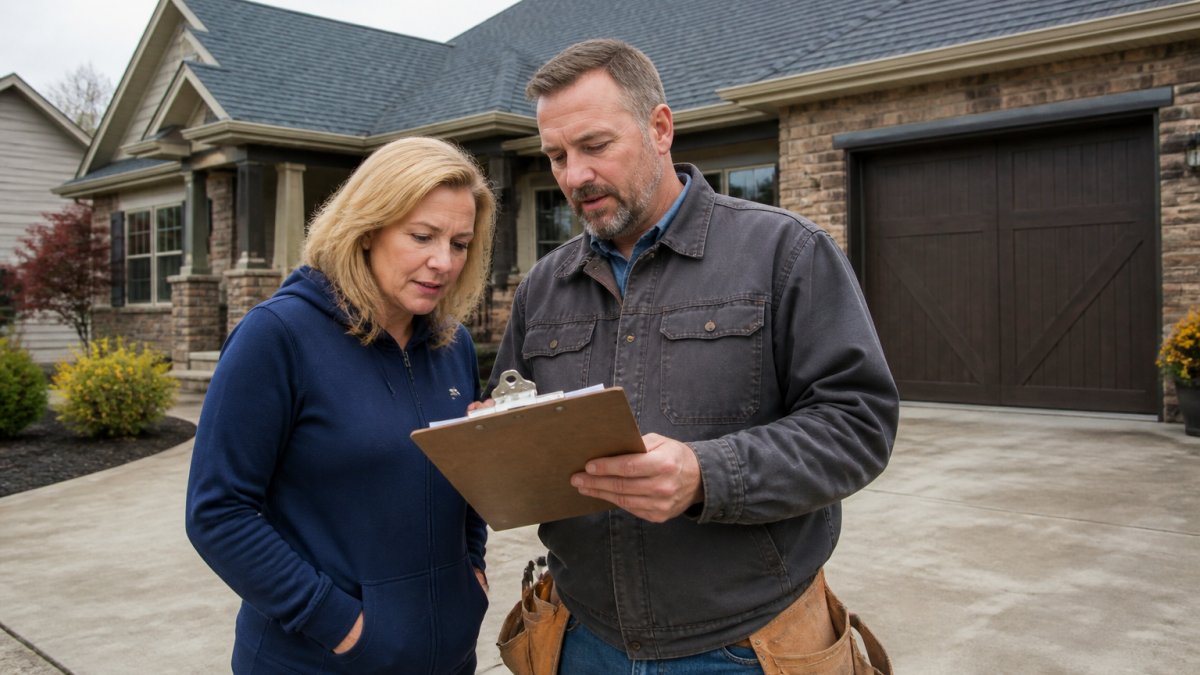
- License number verified with the state or local board
- Certificate of insurance confirmed by phone with the insurer
- Physical local address, not just a phone number
Local contractor status deserves its own line item. An out-of-state crew that arrives after a storm and vanishes by winter will not answer a callback when a leak shows up.
You can also see completed roofing contractor projects across Henderson to judge the work before you ever pick up the phone.
Questions to Ask a Roofing Contractor Before You Sign
The right questions separate prepared companies from smooth talkers. Ask them in person and write down the answers. Vague replies are a warning sign.
- Who pulls the permits, and is that cost in the bid?
- How many layers are on my roof now, and what does the tear-off involve?
- What underlayment, decking, and ventilation go into the roofing system?
- Who is my point of contact during the project, and how do you handle communication?
- What happens if it rains mid-project?
- What does your workmanship warranty cover, and for how long?
- Will you put the payment schedule and project timeline in writing?
- How do you handle change orders if hidden damage turns up?
That last question matters more than most homeowners expect. Rotting decking and old flashing are common finds after tear-off. A fair contractor documents the problem, photographs it, prices the fix, and waits for your approval. A bad one does the work and bills you later.
How to Compare Roofing Estimates Without Getting Fooled by Lowball Pricing
Comparing roofing estimates means comparing scope, not totals. A bid far below the others is usually missing something: no tear-off, thinner underlayment, no permit, cheap flashing, or no warranty. Lowball pricing wins the job and loses the homeowner money later.
Build a Side-by-Side Bid Comparison Sheet
Line up every bid against the same criteria. This is the fastest way to spot what a cheap quote left out.
| Line item | Bid A | Bid B | Bid C |
|---|---|---|---|
| Tear-off and disposal | |||
| Decking repair allowance | |||
| Underlayment type | |||
| Shingle brand and line | |||
| Ridge and starter strips | |||
| Ventilation | |||
| Flashing replacement | |||
| Permit included | |||
| Workmanship warranty | |||
| Payment schedule | |||
| Total |
Fill every cell.
Pair the sheet with a quick instant roofing estimate to benchmark the numbers you receive, and read up on hidden fees to avoid on a home project before you assume the lowest bid is the honest one.
Review the Roof Replacement Contract Checklist and Change Order Terms
The roof replacement contract checklist is where good projects get protected. Never sign a one-page proposal that lists a price and nothing else. A proper written contract should spell out every one of these:
- Exact project scope and materials by brand and product line
- Total price, deposit amount, and payment schedule tied to milestones
- Start date and estimated project timeline
Read the Warranty Fine Print Before You Sign
Most homeowners read the warranty after the roof leaks. Read it before the contract is signed. Two warranties are in play, and they protect you differently.
The manufacturer warranty covers shingles and accessories.
The workmanship warranty covers installation errors, the most common cause of early roof failure. This is the warranty that pays in year three when a valley leaks because flashing was installed wrong.
Watch for these warranty exclusions, which appear in most manufacturer documents:
- Damage from foot traffic, hail, or wind above a stated speed threshold
- Improper ventilation or decking that was not corrected at installation
- Repairs made by anyone other than the original installer
How Change Orders Should Work
Hidden damage is normal on a tear-off. Rotting decking, failed flashing, and deteriorated fascia are common once the old shingles come off. The question is not whether a change order happens, it is whether the process is fair.
A fair change order follows four steps: the crew documents the problem with photos, the contractor prices the fix in writing before doing the work, you approve it in writing, and the added cost appears on the final invoice with a matching paper trail. A bad contractor does the work first and bills you later, leaving you with no leverage.
Ask the contractor to state the change-order process in the contract, including pricing for common repairs. A contractor who will not put unit pricing in writing is telling you something about how the final invoice will look.
Verify Roofing-System Details, Permits, and Project-Day Quality Control
Quality shows up in the details you can check before and during installation. Start with the roof inspection report. It should note the roof's age, the number of layers, the condition of the decking, and any roof repair items found around chimneys, valleys, and skylights.
The Roofing-System Details Homeowners Should Verify
A roof is a system, not a stack of shingles. The parts under the shingles determine whether the roof lasts 15 years or 30. Ask the contractor to list each component by brand and product line in the bid, and confirm these are present:
- Underlayment: Confirm the type and weight in the bid.
- Ice-and-water protection: A self-adhering membrane belongs in valleys, along eaves, and around penetrations in cold climates. Ask where it will be installed, not just whether it is included.
- Flashing: Step flashing at sidewalls, counterflashing at chimneys, and drip edge at eaves are the most common leak points. Confirm flashing is replaced, not reused.
- Ventilation: Intake vents at the eaves and exhaust vents near the ridge must be balanced. Poor ventilation shortens shingle life and can void the manufacturer warranty.
Manufacturer warranties often require installation to published specifications. Ask the contractor to name the installation requirements for the product in your bid.
Permits and Code Compliance
Permits should be pulled in the contractor's name, with the inspection scheduled before the job starts. Confirm the permit number in writing and verify it with the local building department. Building codes govern fastening schedules, flashing details, and ventilation requirements, the same items that determine whether the roof performs. Ask who meets the inspector on site and whether you will receive a copy of the final sign-off.
Project-Day Quality Control
Set expectations before the dumpster arrives. A well-run crew protects your property and documents its work.
Before installation: Confirm the dumpster placement will not crush gutters or landscaping, and ask how the crew will protect siding, windows, and plants.
After installation: Confirm daily cleanup, including a magnetic nail sweep at the end of each day and a final sweep of the yard and driveway.
Watch out: a contractor who cannot tell you who will supervise the crew, whether subcontractors will be used, or how defects are documented after installation has not thought about quality control. Those answers should be immediate.
Get a Free, No-Pressure Roof Assessment From Fraley's Home Improvement
Choosing a roofer comes down to three things: verified credentials, a scope you can compare, and a company that answers the phone after the job is done. That is the standard we hold ourselves to. Fraley's Home Improvement has served homeowners for more than 55 years as a family-operated business, with GAF-certified roofing and a 4.9 rating across 91+ Google reviews. Our process is simple and transparent: a free, no-pressure estimate, honest work at fair pricing, and clear communication from the first call to the final inspection.
Frequently Asked Questions
How do I verify a roofing contractor's license and insurance?
Ask for the contractor's license number and confirm it with your state or local licensing board, since requirements vary by jurisdiction. Request a current certificate of insurance showing general liability coverage and workers' compensation, then call the insurer to confirm the policy is active. A legitimate roof replacement contractor will provide these documents without hesitation. Also ask whether the crew is employees or subcontractors, and confirm coverage extends to everyone on site.
How many roofing estimates should I get before choosing a contractor?
Get at least three written estimates so you can compare project scope, materials, and workmanship side by side. More than three is fine if you want a clearer picture of local pricing. Use a bid comparison sheet that lists tear-off, underlayment, shingles, flashing, ventilation, permits, cleanup, and warranty terms for each bid. If one estimate is dramatically lower, check what it excludes before assuming it is a better deal.
What should a roof replacement estimate include?
A complete estimate should list the roofing materials and manufacturer, the number of squares, tear-off and disposal, underlayment and flashing, ventilation, permits, labor, and a projected timeline. It should also state the manufacturer warranty and workmanship warranty separately, plus the payment schedule. Ask whether change orders require written approval before work continues. Missing line items are the most common source of surprise costs after the job starts.
What warranties should I look for when replacing a roof?
Look for two distinct warranties: a manufacturer warranty on the shingles and materials, and a workmanship warranty from the installer covering labor and installation errors. Read the fine print on transferability, exclusions, and how long each lasts. Keep both warranty documents with your contract and ask who to call if a leak appears years later.
If your roof is past its prime or storm damage has you worried, get a straight answer before you sign anything. Request a free, no-obligation estimate from Fraley's Home Improvement and get a written scope you can actually compare. Call (270) 826-0627 or fill out the form, and our team will respond within two business hours.