 Ultimate guide
Preventing Water Damage in Your Home Exterior
Last Updated: November 1, 2026
Quick Summary
Preventing water damage in home exterior means controlling water from the top down: roof and flashing shed rain, gutters and downspouts route it, siding and seals block wind-driven rain, and grading carries it away from the foundation. Fix the source of the leak, not just the interior stain, because water damage usually begins above the foundation.
- Clean gutters twice a year at minimum, more often if trees overhang the roofline.
- Aim for roughly six inches of fall over the first ten feet from the wall.
- Roof leaks commonly start at flashing, valleys, or penetrations around vents and chimneys.
- Re-caulk around windows, doors, and corner trim with exterior-grade sealant.
- Replace siding that is soft or swollen, since trapped moisture spreads to the sheathing.
Table of Contents
- Follow the Water: How Rain Moves From Roof to Drain
- How to Prevent Water From Getting Into Your House
- Roof Inspection and Repair: Your First Barrier Against Water Damage
- Gutter Maintenance to Prevent Water Damage at the Foundation
- Why Your Exterior Wall Leaks When It Rains
- Siding Water Damage Prevention and Seal Checks
- Grading, Drainage, and Storm Prep for Heavy Rain
- Get a Free Exterior Assessment From Fraley's Home Improvement
- Frequently Asked Questions
Follow the Water: How Rain Moves From Roof to Drain
Preventing water damage in home exterior starts with one idea: water always takes the easiest path downhill, and your job is to decide that path before the storm does.
Water damage is the deterioration of building materials caused by uncontrolled moisture intrusion, and on a home exterior it almost always begins above the foundation. Rain lands on the roof, sheds into gutters, travels down downspouts, and should exit well away from the house.
The Four Lines of Defense
Think of your exterior as four barriers, and water only needs to beat one.
- The roof and flashing shed the bulk of rainwater.
- Gutters and downspouts collect and route it.
- Siding, windows, and doors block wind-driven rain from the walls.
- Grading and drainage carry water away from the foundation.
A common mistake is fixing the visible problem and ignoring the source. A wet basement often traces back to a clogged gutter two stories up, not a cracked foundation.
How the Chain Actually Works
- Roof surface and flashing. Shingles shed water by gravity; flashing protects the seams where roof planes meet walls, chimneys, valleys, and vents. When sealant under flashing dries and cracks, water slips behind the shingle course and travels along the decking until it finds a nail hole or seam, which is why a ceiling stain often appears far from the visible roof defect.
- Gutters and downspouts. A gutter is a trough with a fixed capacity. When leaves and grit reduce that capacity, water backs up under the shingle edge, rots the fascia, and overflows at the lowest point, usually a corner near the foundation. Downspouts are the discharge pipe; if one is crushed, buried, or disconnected, the entire upstream system backs up.
- Siding, windows, and doors. These are rain screens, not waterproof membranes. They rely on overlapping courses, intact caulk, and weep holes to shed wind-driven rain. Water that gets behind the siding needs a way out; when caulk fails or weep holes are painted shut, moisture is trapped against the sheathing.
Where the Chain Breaks Most Often
Failures often cluster at transitions, not in the middle of a surface. Watch these points:
- Roof-to-wall and roof-to-chimney junctions, where flashing and counter-flashing meet.
- Valleys, where two roof planes concentrate flow.
- Gutter corners and outlets, where seams separate and hangers loosen.
A Simple Way to Trace a Leak
When you find moisture indoors, work the chain backward from the symptom:
- Note where and when the stain appears. Wind-driven rain points to a wall opening on that side; any heavy rain points upstream to roof or gutters.
- Check the nearest roof penetration and flashing above that location.
- Confirm the gutter and downspout serving that roof section are clear and discharging away from the house.
- Inspect the siding, caulk, and window or door seals on that elevation.
- Check the grade and any window well at the base of that wall.
Most leaks resolve to one of these five checks. Fixing the source stops the damage; patching the interior stain only hides it.
The FEMA guide to protecting your home from flooding makes the same point: keeping water away from the structure is more effective than reacting after it gets in. Most of these checks take minutes. The repairs they prevent take weeks.
How to Prevent Water From Getting Into Your House
The most reliable way to prevent water from getting into your house is to control it in order, from the top down. Work through these steps once in fall and once in spring:
- Inspect the roof surface and flashing for lifted shingles, cracked sealant, and missing pieces.
- Clear gutters and downspouts of leaves and grit, then confirm water flows freely.
- Check that downspouts discharge several feet from the foundation, not against it.
- Walk the perimeter and look for soil that slopes back toward the walls.
- Seal gaps around windows, doors, and utility penetrations with fresh caulking.
- Examine siding and trim for soft spots, bubbling paint, or open seams.
- Test basement windows and window wells for proper drainage.
The FEMA guide to protecting your home from flooding makes the same point: keeping water away from the structure is more effective than reacting after it gets in. Most of these checks take minutes. The repairs they prevent take weeks.
Roof Inspection and Repair: Your First Barrier Against Water Damage
Your roof is the first line of defense, and it fails at the details, not the middle of the field.
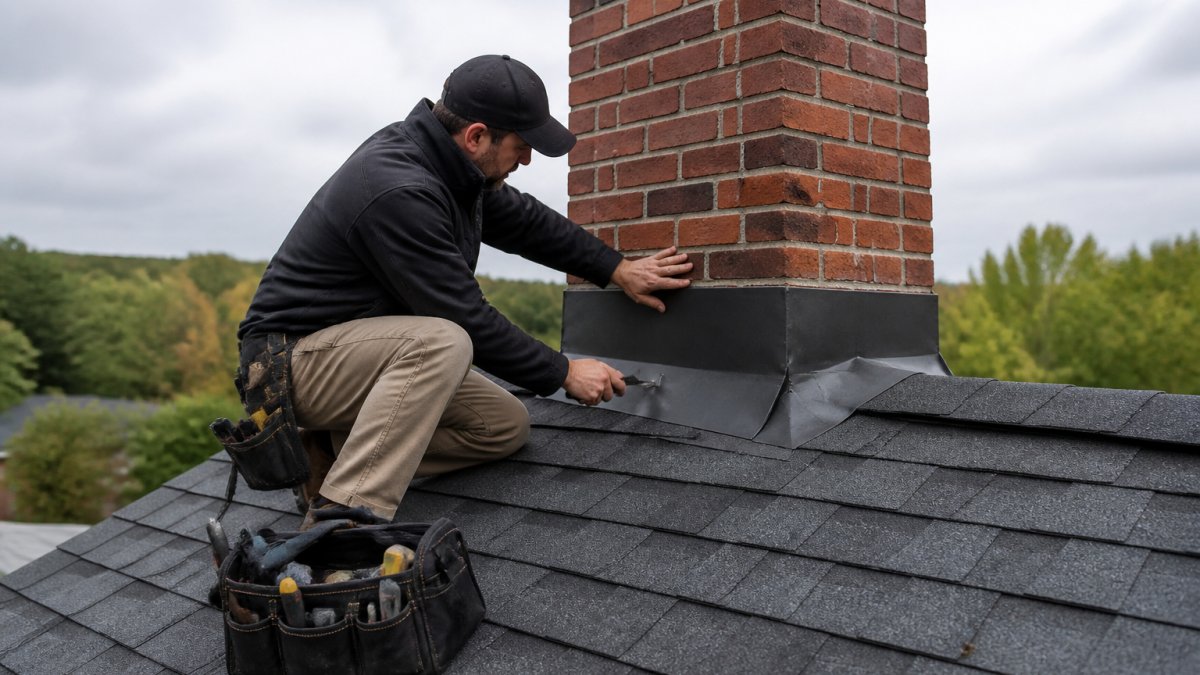
Look for granules collecting in gutters, curling or missing shingles, rusted nails backing out, and dark streaks that suggest trapped moisture.
If you'd rather have trained eyes on it, our team offers roof inspection in Henderson, KY to catch small failures before they reach your ceilings.
Gutter Maintenance to Prevent Water Damage at the Foundation
Gutter maintenance to prevent water damage is the cheapest insurance a homeowner has, and it's the step most often skipped.
Clean gutters twice a year at minimum, more often if trees overhang the roofline. Check that hangers are tight, seams aren't separating, and downspouts aren't buried or crushed.
For full cleaning, repair, or new installation, you can request a free estimate for gutter services from Fraley's Home Improvement.
Why Your Exterior Wall Leaks When It Rains
An exterior wall leaking when it rains is almost never the wall itself; it's a failed seal or a drainage problem upstream. Water enters through cracked caulking, failed window seals, gaps at door thresholds, or siding seams, then travels inside the cavity before showing up indoors.
Diagnosis matters more than a quick patch. For a deeper guide, see signs of water damage behind walls and what to check. The timing and location of the stain tell you which link in the chain failed.
Read the Timing and Location
Use these patterns to narrow the source before you climb a ladder:
- Stain appears only during wind-driven rain on one elevation. Suspect a window, door, or siding seam on that side. Wind pushes water past seals that shed vertical rain fine.
- Stain appears after any heavy rain, regardless of wind. Look upstream at the roof, flashing, or gutters above that location.
- Stain appears near the base of the wall or in the basement. Check grading, downspout discharge, and window wells first.
Warning Signs That Mean Act Now
Routine maintenance can wait for a dry weekend. These signs cannot:
- Active drip or running water during a storm.
- Soft, spongy drywall or trim that presses in under finger pressure.
- Bubbling or peeling paint on interior walls, which often means moisture is pushing from behind.
Any of these points to moisture already inside the assembly. Water intrusion spreads fast and softens framing, so stop the source and dry the cavity rather than repaint.
When a Patch Is Not Enough
Caulk and paint are maintenance, not repair. They are the right fix for hairline cracks and worn sealant on otherwise sound materials. They are the wrong fix when:
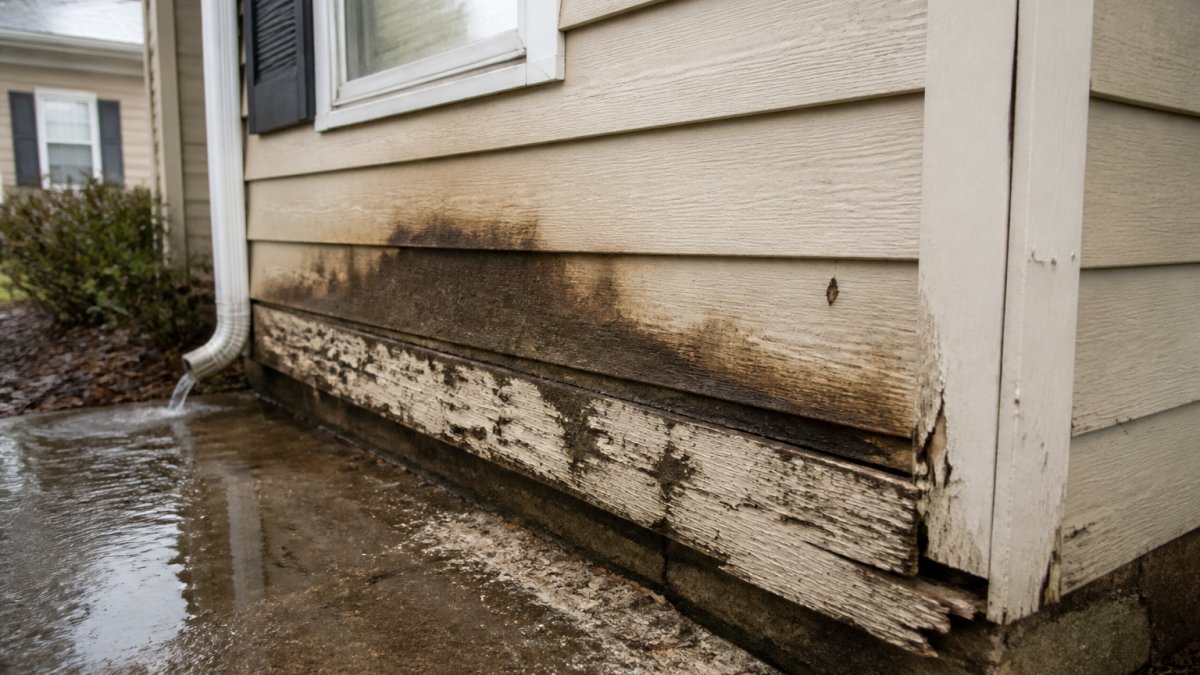
- Siding or trim is soft, swollen, or crumbly. The substrate is already wet; sealing over it traps moisture and spreads rot.
- The same seam leaks after two resealing attempts. The opening is likely larger than the caulk can bridge, or water is entering elsewhere and exiting there.
- Flashing is lifted, rusted, or missing. Flashing is a mechanical water-shedding detail; sealant alone will not replace it.
In those cases, replace the failed component, restore the flashing detail, or correct the drainage putting water against the wall.
What a Professional Assessment Adds
Finding the entry point rather than the exit point is often necessary, because the visible stain can be several feet from the actual opening. Interior clues such as bubbling paint and warped baseboards can help indicate how urgent a moisture problem is.
Siding Water Damage Prevention and Seal Checks
Siding water damage prevention comes down to two jobs: keep water off the surface and keep it from getting behind the panels. Modern siding sheds rain well, but it depends on intact caulk, proper flashing, and a healthy paint or finish.
Walk each elevation and check for:
- Soft or spongy spots that press in under finger pressure
- Paint that bubbles, peels, or chalks
- Open seams and gaps where panels meet trim
Re-caulk around windows, doors, and corner trim with exterior-grade sealant. You can also schedule siding repair for storm damage, moisture issues, and aging exteriors.
Grading, Drainage, and Storm Prep for Heavy Rain
Water that reaches the foundation should already be heading away from it.
Check that soil slopes away from the walls, downspouts discharge well clear of the foundation, and window wells and basement windows drain properly.
Seasonal prep matters too. Trim trees and bushes back from the roof and siding, since overhanging limbs load gutters and hold moisture against exterior walls.
A Seasonal Exterior Inspection Schedule
A simple schedule keeps prevention from becoming an emergency.
| Season | Focus Area | Key Tasks |
|---|---|---|
| Spring | Roof and gutters | Inspect shingles and flashing; clear winter debris from gutters |
| Summer | Siding and seals | Check caulking and paint; look for soft spots and open seams |
| Fall | Gutters and drainage | Clean gutters after leaf drop; confirm downspouts discharge away |
| Winter | Foundation and pipes | Check grading, window wells, and exposed pipe insulation |
The CDC guidance on preventing water intrusion and mold reinforces why speed matters: moisture that lingers indoors invites mold within days, so catching intrusion early is the whole game.
Get a Free Exterior Assessment From Fraley's Home Improvement
Water damage often starts as a small problem that goes unnoticed for a season. The failures are quiet until they're expensive, and by then water has usually reached the framing.
Fraley's Home Improvement has more than 55 years of experience as a family-operated, GAF Factory Certified team.
Get a free estimate and let our team walk your exterior from roof to foundation.
Frequently Asked Questions
How do I prevent water from getting into my house?
Start at the top and work down. Keep the roof sound, clear gutters and downspouts so rainwater leaves the roof quickly, and make sure downspouts discharge several feet away from the foundation. Seal gaps around windows, doors, and utility penetrations with caulk, and check that the ground slopes away from the house. Most water damage in home exterior systems starts with one blocked or broken link in that chain, so a seasonal walk-around catches small problems before they become leaks.
How often should I clean my gutters to prevent water damage?
Twice a year is the baseline: once in late spring and once in fall after the leaves drop. Homes surrounded by trees may need cleaning three or four times a year. Watch for overflow during heavy rain, sagging sections, or water staining on the fascia. Clogged gutters push rainwater over the edge and onto siding and foundation walls, which is one of the most common paths to expensive repairs. Gutter guards reduce the frequency but do not eliminate the need to check.
Why is my exterior wall leaking when it rains?
Water usually enters through a failed seal rather than the wall itself. Common culprits are cracked caulk around windows and doors, worn weatherstripping, gaps at siding joints, missing flashing above windows, and hairline cracks in masonry or stucco. Wind-driven rain can also force water past vents and sills. Trace the leak from the outside in during or right after a storm, and repair the seal before the next rain. Persistent leaks that return after caulking point to a flashing or siding problem that needs a professional look.
Can damaged siding let water into a house?
Yes. Siding is the first barrier, and once it cracks, warps, or pulls loose, rainwater reaches the sheathing and framing behind it. Signs of siding water damage include bubbling paint, soft spots, dark streaks, and musty smells inside the wall. Small cracks can be sealed, but sections with rot or widespread warping need replacement. Siding water damage prevention comes down to inspecting joints and penetrations each season and repairing damage before it spreads behind the wall.
What exterior areas should I inspect to prevent water damage?
Check the roof for missing or lifted shingles and worn flashing, then gutters and downspouts for clogs and loose hangers. Look at siding for cracks and gaps, windows and doors for failed caulk and weatherstripping, and the foundation for cracks and soil that has settled toward the house. Also check basement window wells, exterior faucets, and any pipes that run along the outside wall. A quick inspection after every major storm catches most problems early.
Does homeowners insurance cover water damage from rain?
Policies typically cover sudden, accidental damage from rain, such as a storm tearing off shingles and water pouring in. Damage from long-term neglect, like a roof that leaked for months or gutters that were never cleared, is usually excluded. Flooding from rising water is a separate policy through the National Flood Insurance Program. Document damage with photos right away and call your insurer before making permanent repairs, since most policies require prompt reporting.
Water doesn't wait, and neither should you. If you've spotted a stain, a soft spot, or a downspout dumping water where it shouldn't, get ahead of it. Get started with Fraley's Home Improvement and protect your home from the outside in.